

Acne Keloidalis Nuchae Treatment in Atlanta, GA: Stopping the Bumps and Scarring at the Nape
Calm the bumps, prevent scarring and keep the back of your neck smooth.
- Common In:
- Men with curly, coarse hair
- Primary Causes:
- Close cuts, friction, inflammation
- Treatment Time:
- Visits of 15-60 minutes
- Results:
- Flatter bumps in 2-6 months

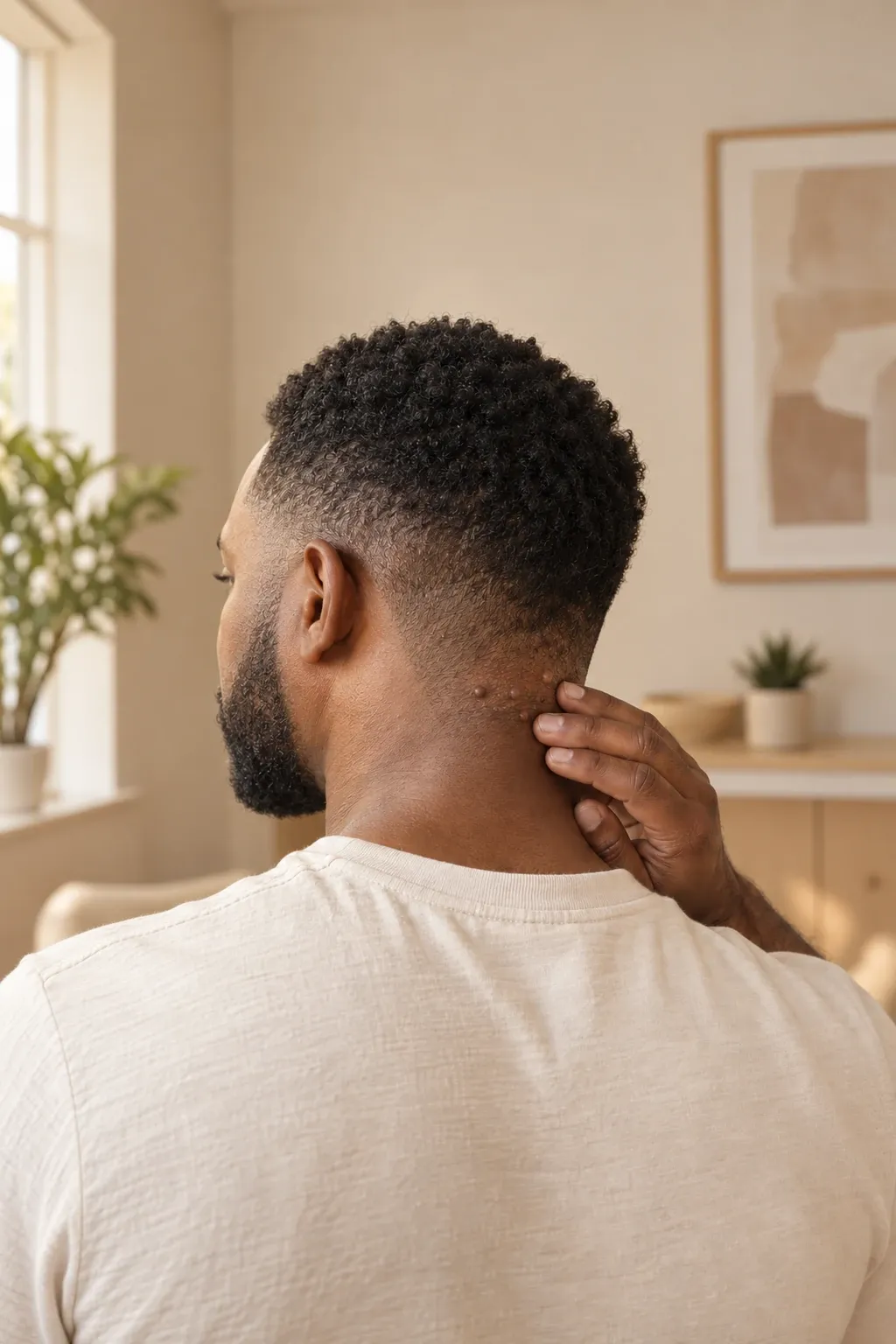
What Is Acne Keloidalis Nuchae?
Recognizing the Signs
Acne keloidalis nuchae (AKN), also called folliculitis keloidalis, is a chronic inflammatory condition of the hair follicles at the back of the neck and lower scalp. Despite its name, it is not true acne. It starts as small, firm, itchy bumps around hair follicles that can turn into pustules and, over time, merge into raised, scar-like plaques where hair no longer grows.
Many people first notice it a few days after a fresh haircut: a line of tender bumps along the back hairline, bleeding after a clipper cut or several hairs sprouting from one opening. Left untreated, AKN can leave permanent scarring hair loss at the nape.
AKN is most common in men with curly or coarse hair from the teen years into middle age, and it is especially frequent in men of African descent. It also affects Hispanic, Asian and white patients and, less often, women. On deeper skin tones the bumps may look dark brown or purple, on lighter skin pink or red, and dark marks can linger after they settle. It is one of the scalp and hair conditions we treat in Atlanta.
Medically reviewed by Dr. Nikki D. Hill, MD, FAAD. Last updated: October 2026.
Why Acne Keloidalis Nuchae Happens
Understanding the Root Causes
01The Science
AKN starts at the follicle. Curly hair can curve back into the skin after close cutting, and sharp, short hair tips at the nape can pierce the follicle wall. The immune system treats that hair as a foreign body, creating the kind of follicle inflammation described in the MedlinePlus guide to folliculitis.
Ongoing inflammation signals fibroblasts, the cells that build scar tissue, to lay down excess collagen. Research on AKN tissue has identified specific immune cells and fibroblasts that drive this scarring. As fibrosis builds, follicles are destroyed, bumps fuse into firm bands and the area becomes a scarring alopecia. That is why our medical hair and scalp care aims to stop inflammation before plaques form.
Friction keeps the cycle going. Collars, helmets and hats rub the nape, heat and sweat add irritation, and every close haircut reinjures healing follicles.
02Deeper Understanding
How We Diagnose and Treat AKN at SOCAH Center
Exam, Staging and a Layered Plan
AKN is usually diagnosed with a careful exam of the nape and scalp. Dr. Hill looks at the number and size of bumps, any pustules or drainage, whether plaques have formed and how much hair has been lost. Trichoscopy can show tufted hairs and lost follicle openings. A culture of active pustules can guide antibiotic choice, and a biopsy is reserved for unusual cases, such as separating AKN from dissecting cellulitis of the scalp.
Treatment is layered to match the stage. Early bumps respond to topical corticosteroids, topical retinoids and antibacterial washes, with oral anti-inflammatory antibiotics for flares. Firm papules are often flattened with corticosteroid injections placed into each bump over several visits. Because hair inside the follicle keeps inflammation going, laser hair removal for AKN reduces regrowth at the nape and can help prevent new bumps. Our article on how laser hair removal protects every skin tone explains how settings are matched to each skin type.
Large plaques that do not respond to injections may need surgery. With keloid and scar removal, Dr. Hill can excise the plaque, often followed by injections and laser hair removal to lower the chance of recurrence.
What Raises Your Risk of Acne Keloidalis Nuchae?
AKN rarely has a single cause. These factors work together to keep inflammation active at the nape.
- 01Close Cuts and Edge-UpsVery short cuts, edge-ups and razor lines at the nape leave sharp hair tips that curl back and pierce the skin.
- 02Curly or Coarse HairTightly curved hair shafts are more likely to grow back into the follicle wall after cutting.
- 03Friction at the NapeCollars, helmets, hats and headrests rub the back of the neck all day and reinjure irritated follicles.
- 04Heat and SweatGeorgia heat, workouts and sweating under helmets or uniforms raise irritation and can trigger flares.
- 05Associated ConditionsStudies link AKN with hidradenitis suppurativa and thyroid disease, so your provider may ask about related symptoms.
- 06Picking and ScratchingPicking or squeezing bumps adds injury and inflammation, which pushes lesions toward scarring.

Why Choose SOCAH Center for Acne Keloidalis Nuchae Care in Atlanta, GA
At SOCAH Center, Dr. Nikki D. Hill, MD, FAAD, a board-certified dermatologist with deep expertise in scalp and hair loss disorders, diagnoses AKN and performs injections and surgical care herself, while our trained laser team works under her supervision.
- Scalp and Hair Specialists
- AKN is a scarring hair disorder, and medical hair loss is the core of Dr. Hill's practice.
- Every Stage in One Practice
- Topical care, injections, laser hair removal and surgical removal are coordinated in one plan.
- Laser Matched to Your Skin
- Laser settings are chosen for your skin tone and hair type to reduce hair safely at the nape.
- Barber-Friendly Guidance
- We give practical grooming advice you can share with your barber to avoid triggering new bumps.

Treatment Options Comparison
Compare the treatments SOCAH Center offers for acne keloidalis nuchae, from early bumps to firm plaques.
| Treatment | Best For | Session Time | Results Timeline | Maintenance |
|---|---|---|---|---|
| Hair Loss Treatment | Early bumps and flares | Visits of 15-30 min | Calmer in 4-8 weeks | Daily topicals |
| Laser Hair Removal | Preventing new bumps | About 15-30 min | Fewer bumps in months | Series, then touch-ups |
| Keloid Removal | Firm plaques and bands | About 15-60 min | Flatter over 2-6 months | Injections every 4-6 weeks |
Signs You May Have Acne Keloidalis Nuchae
Bumps at the back of the scalp that return after every haircut are different from razor bumps in the beard area and deserve a dermatology exam before firm scars form.
Bumps After Haircuts
Small, firm, itchy bumps appear along the back hairline within days of a fresh cut or edge-up.
Pus or Bleeding
Some bumps fill with pus, crust over or bleed when clippers or a comb catch them.
Firm Raised Bands
Bumps have merged into a hard, raised ridge across the nape that feels thicker than the skin around it.
Tufted Hairs
Several hairs seem to grow from one opening, or hair grows in clumps between bumpy, scarred areas.
Hair Loss at the Nape
The lower back of the scalp has smooth, shiny spots where hair no longer grows back.
Itch and Tenderness
The back of your neck itches, burns or feels sore against collars, hats, helmets or pillows.



Related Treatment
Keloid Removal
Flatter, calmer keloid scars, with a plan built around how your skin heals.
- Combined Care
- Lower Recurrence
- Symptom Relief
Laser Hair Removal
Smoother skin and fewer ingrown hairs, with laser settings chosen for your skin and hair.
- Fewer Ingrowns
- Calmer Skin
- Lasting Reduction
PRP for Hair Loss
Concentrated platelets from your own blood, placed where follicles are thinning, for every hair type.
- Your Own Blood
- No Surgery
- Little Downtime
Frequently Asked Questions
Is acne keloidalis nuchae contagious?
Can I keep getting haircuts?
Does laser hair removal help AKN?
Will the bumps go away on their own?
Can AKN come back after surgery?
Does insurance cover AKN treatment?
Schedule Your Acne Keloidalis Nuchae Treatment Consultation
Scientific References
- Alves et al., J Cutan Med Surg. (2022). Acne Keloidalis Nuchae. PMID: 36124546.
- Brahe et al., Cutis. (2020). Acne keloidalis nuchae in the armed forces. PMID: 32603383.
- Hong et al., J Invest Dermatol. (2024). Profibrotic Subsets of SPP1(+) Macrophages and POSTN(+) Fibroblasts Contribute to Fibrotic Scarring in Acne Keloidalis. PMID: 38218364.
- Kridin et al., Arch Dermatol Res. (2021). Hidradenitis suppurativa is associated with acne keloidalis nuchae: a population-based study. PMID: 32676745.
- East-Innis et al., Int J Dermatol. (2017). Acne keloidalis nuchae: risk factors and associated disorders - a retrospective study. PMID: 28664654.
- Skin of Color Society. (2026). Patient education on acne keloidalis nuchae, its triggers and treatment options.