

Keloid Removal in Atlanta, GA: Injection, Laser and Surgical Options for Keloid-Prone Skin
- Treatment Time:
- 15-60 minutes
- Downtime:
- None to 2 weeks
- Results Last:
- Long term with follow-up
- FDA Status:
- FDA-approved steroid option

Keloid Care in Atlanta
Keloid removal in Atlanta, GA at SOCAH Center treats raised, firm scars that grow beyond the original wound. Because keloids can return after simple excision, care combines injections, laser, topical therapy and, when needed, surgery with follow-up.
Your plan is led by board-certified dermatologist Dr. Nikki D. Hill, a Fellow of the American Academy of Dermatology and member of the American Society for Dermatologic Surgery. Dr. Hill treats keloids on the earlobes, chest, shoulders, jawline and back of the scalp, including the firm bumps of acne keloidalis nuchae at the nape of the neck. Keloid care is part of our medical dermatology services in Atlanta, so one team handles diagnosis, injections, surgery and follow-up.
Medically reviewed by Dr. Nikki D. Hill, MD, FAAD. Last updated: October 2026.
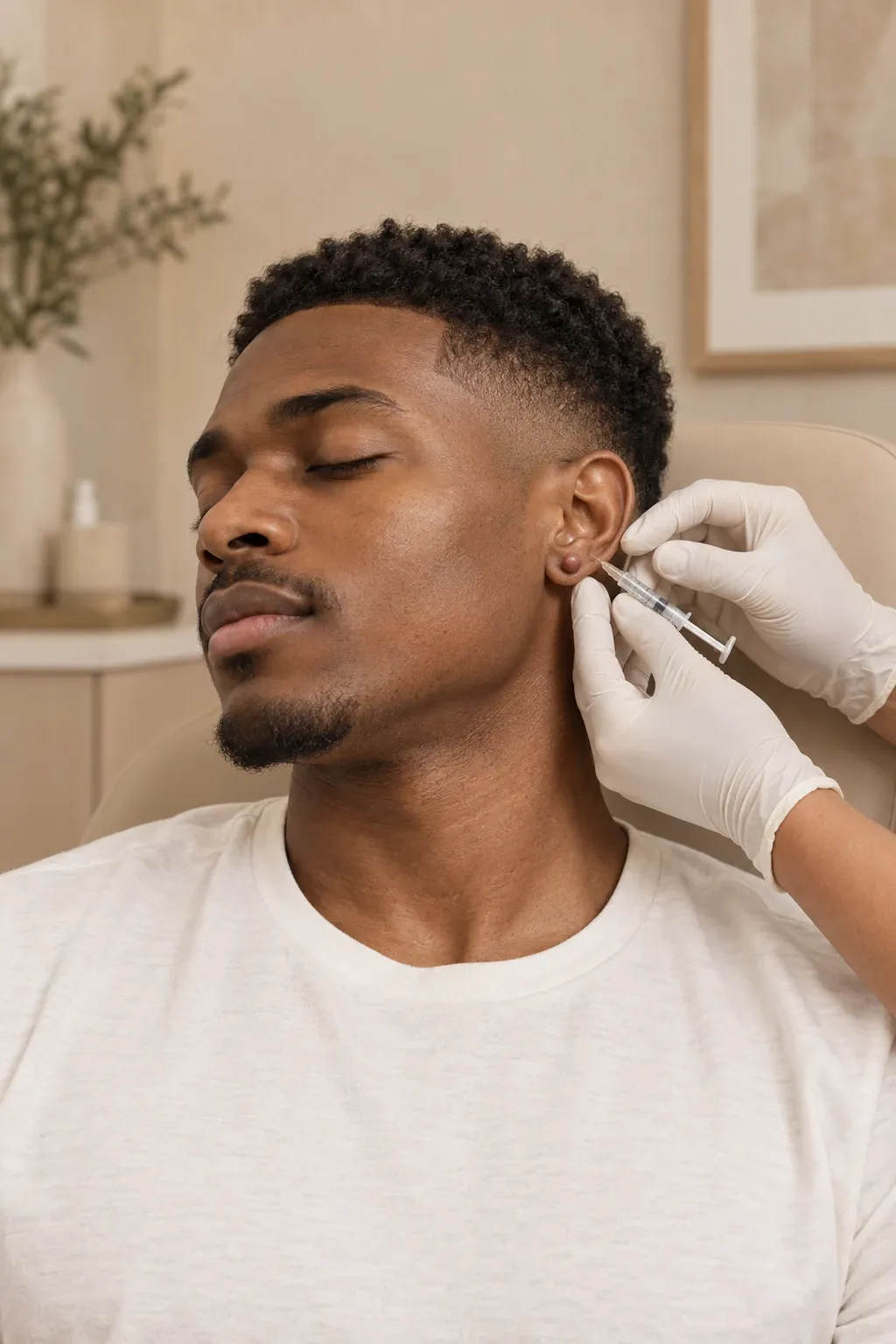
The Challenge
Why Keloid Removal Takes More Than a Simple Cut
From frustration to a clear plan
Keloids can itch, ache, catch on clothing and keep growing for months or years. Many people have tried silicone sheets or over-the-counter creams with little change, and some had a keloid cut off only to watch a larger one return. Earlobe keloids from piercings, chest and shoulder keloids after acne, and firm bumps along the jaw or nape affect comfort and confidence, and they can leave people hesitant to pierce, shave or have needed surgery.
Dr. Hill starts by confirming the diagnosis and asking how long the keloid has been growing, what triggered it and how your skin has healed in the past. Smaller or newer keloids often respond to a series of steroid injections, sometimes paired with laser therapy. Larger or long-standing keloids may be removed surgically, then protected with injections, pressure earrings or silicone while the skin heals. The goal is a flatter, softer, more comfortable scar and a lower chance of regrowth.
Understanding Keloid Treatment
What Is Keloid Removal?
Calming an overactive healing response
Keloid removal combines in-office treatments that flatten, shrink or excise keloid scars and help keep them from returning. Triamcinolone acetonide is FDA-approved for injection into keloids, and neurotoxin use is off-label. The AAD guide to keloid treatment outlines the same approach.
Keloids form when skin keeps making collagen after a wound closes. Injections every four to six weeks slow that collagen and calm inflammation, laser reduces redness and bulk, and surgery debulks large keloids. Itching usually eases first, then height and firmness drop over months.
Treatment Timeline:
- Visit Length:
- 15-60 minutes
- First Signs:
- 2-4 weeks
- Full Effect:
- 3-6 months
- Recovery:
- None to 2 weeks
Where Keloids Form
Keloid Treatment Areas
From earlobes to the hairline
- Earlobe Keloids
- Piercing keloids flattened or removed, with prevention afterward
- Chest and Shoulders
- Keloids after acne or minor injury softened with injections
- Nape and Scalp
- Firm bumps at the hairline, including acne keloidalis nuchae
- Jawline and Beard Area
- Keloids that form after shaving bumps or ingrown hairs
- Surgical Scars
- Raised scars after surgery or a C-section treated early
- Itch and Tenderness
- Relief for keloids that itch, burn or ache day to day
Benefits of Keloid Removal
What a combined plan offers
Keloid Removal vs Alternatives
How a combined keloid removal plan compares with single treatments many people try first.
| Treatment | How It Works | Session Time | Results | Recurrence Risk | Downtime | Best For |
|---|---|---|---|---|---|---|
| Combined Keloid Removal | Injections, laser or surgery, plus follow-up | 15-60 minutes | Flatter, softer scar | Lowest of these options | None to 2 weeks | Most keloids, including recurrent ones |
| Silicone Gel Sheeting | Hydrates and compresses the scar | 12+ hours daily | Modest softening | Does not remove a keloid | None | Prevention, new scars |
| Steroid Injections Alone | Slows collagen and inflammation | 10-15 minutes | Gradual flattening | Moderate | None | Small or early keloids |
| Cryotherapy | Freezes scar tissue | 10-20 minutes | Volume reduction | Moderate | 1-2 weeks, may lighten skin | Small keloids |
| Pressure Earrings or Garments | Steady pressure limits collagen | 12-24 hours daily | Prevents regrowth | Lower when worn daily | None | Earlobes after removal |









Candidacy
Who Is a Good Candidate for Keloid Removal?
Matching treatment to your keloid
Keloid treatment suits most adults and many teens whose raised scars itch, hurt, grow or affect confidence. People who have formed keloids before, or who have a family history of them, benefit most from early care and a prevention plan.
Ideal Candidates for Keloid Removal
- Earlobe keloids after a piercing, often treated together with repair of a torn or stretched earlobe
- Keloids on the chest, shoulders, back or jawline after acne, shaving bumps or minor injury
- Firm, keloid-like bumps at the nape or back of the scalp
- Raised surgical or C-section scars that keep thickening
- Patients able to return for follow-up visits, which help prevent recurrence
Who Should Wait or Avoid Keloid Removal
- Pregnancy or breastfeeding, when injections and neurotoxins are usually postponed
- An active infection or open wound near the scar
- Uncontrolled diabetes or another condition that slows healing, for surgical removal
- Known allergy to an ingredient in the injected medication
- A growth that may not be a keloid, which Dr. Hill may biopsy first
Flat or pitted marks left by breakouts are not keloids and respond better to acne scar treatment or laser skin resurfacing for texture. Dr. Hill confirms the diagnosis at your first visit.
Your Visit
Keloid Removal Treatment Overview
Step by step
Diagnosis
Dr. Hill examines the keloid, asks how it began and may biopsy an unusual growth first.
Plan
Together you choose injections, laser, topicals, surgery or a combination for its size and history.
Treatment
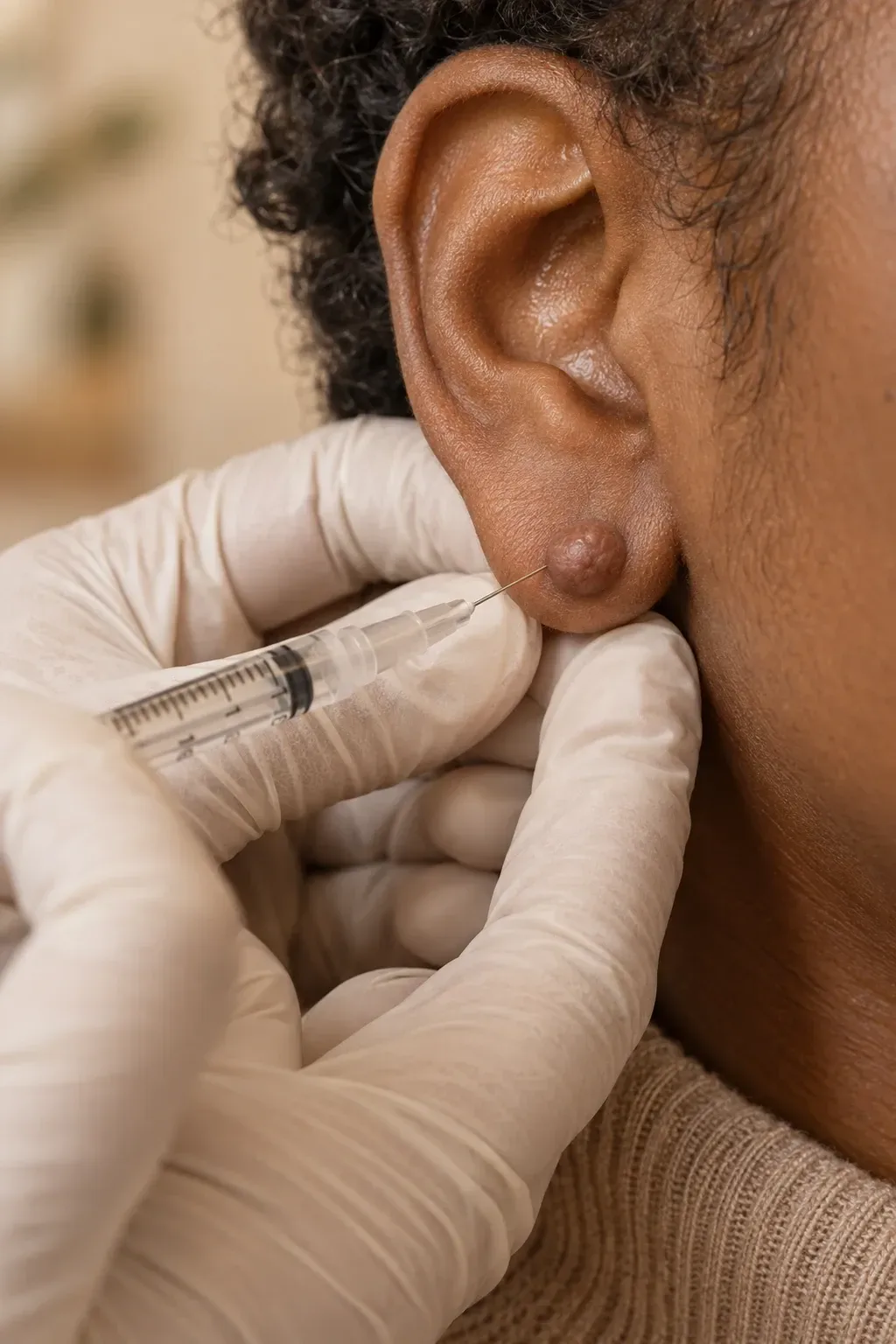
Dr. Hill numbs the area, then injects triamcinolone or removes the keloid and closes it with fine stitches.
Follow-Up
Repeat injections every 4-6 weeks, plus pressure earrings or silicone, help keep the keloid from returning.
Keloid Removal Side Effects and Safety
Keloid treatments are generally well tolerated, and each option carries its own side effects, which Dr. Hill reviews before you begin.
Injections
Steroid injections: brief sting and soreness, plus possible thinning or lightening of nearby skin and small visible vessels, which may be more noticeable in deeper skin tones.
Neurotoxin injections: minor injection discomfort and, rarely, temporary weakness of a nearby muscle.
Laser Therapy and Topical Creams
Laser therapy: redness, swelling or bruising for a few days, with settings chosen to limit pigment change.
Topical creams: dryness or irritation where the cream is applied.
Surgical Removal
Bleeding, infection and recurrence, which follow-up care is designed to lower. MedlinePlus explains how keloids form and why they can return.
Cost
Keloid Removal Cost in Atlanta, GA
Factors, insurance and financing
How Much Does Keloid Removal Cost in Atlanta?
The cost of keloid removal depends on the number and size of your keloids, the methods used, how many injection sessions you need and whether surgery and follow-up care are part of your plan. Dr. Hill reviews your plan and exact pricing at your consultation, before any treatment begins.
Insurance and Keloid Removal
Keloids that itch, hurt, bleed or limit movement are a medical condition, so evaluation and treatment may be covered. Coverage for purely cosmetic removal varies. Our team can help verify your benefits, and you can review the plans we accept on our insurance page.
Financing and Payment Options
For costs insurance does not cover, SOCAH Center accepts CareCredit and Cherry, which offer monthly payment plans. See our financing options for dermatology care.
Why Choose SOCAH Center for Keloid Removal in Atlanta, GA
Board-certified dermatology care
Dr. Hill trained in dermatologic surgery and served as chief resident at the University of Texas at Houston-MD Anderson Cancer Center. Her practice centers on skin, scalp and hair conditions, including the hairline and beard-area keloids many offices refer elsewhere.
Board-Certified Dermatologist
Every keloid plan is set and supervised by Dr. Nikki D. Hill
Every Skin Tone
Care planned for keloid-prone skin across all skin tones and hair types
Prevention Built In
Follow-up injections and pressure care planned before any surgery
Ear and Scalp Focus
Earlobe repair and nape keloid care offered under one roof
Surgical Training
Chief resident training at MD Anderson Cancer Center behind every plan
Insurance Help
Itchy, painful or growing keloids are often covered, and we verify benefits

Related Treatment
Skin Tag Removal
Fast, precise removal of skin tags by a dermatology team, with care for every skin tone.
- One Short Visit
- Minimal Scarring
- Accurate Diagnosis
Mole Removal
Every mole is evaluated first, then removed with the method that suits it and your skin.
- Diagnosis First
- Lab Answers
- No-Stitch Option
Cyst Removal
Remove a bothersome cyst in one short office visit, with a small, carefully closed scar.
- About 30 Minutes
- Lower Return Risk
- Layered Closure
Keloid Removal FAQs
How much does keloid removal cost?
How long does a keloid treatment take?
Do keloid injections hurt?
When will I see results from keloid treatment?
How many keloid injection sessions will I need?
Can a keloid come back after it is removed?
What is the difference between a keloid and a hypertrophic scar?
Who is most likely to develop keloids?
Can I pierce my ears again after an earlobe keloid?
Are neurotoxin injections used for keloids?
Schedule Your Keloid Removal Consultation
References
- Leszczynski et al., Cochrane Database Syst Rev. (2022). Laser therapy for treating hypertrophic and keloid scars. PMID: 36161591.
- Ekstein et al., Int J Dermatol. (2021). Keloids: a review of therapeutic management. PMID: 32905614.
- Walsh et al., Syst Rev. (2023). Keloid treatments: an evidence-based systematic review of recent advances. PMID: 36918908.
- Frech et al., Am J Clin Dermatol. (2023). Hypertrophic Scars and Keloids: Advances in Treatment and Review of Established Therapies. PMID: 36662366.
- Bailey et al., Am Fam Physician. (2024). Management of Keloids and Hypertrophic Scars. PMID: 39700364.
- Poetschke et al., Facial Plast Surg. (2016). DLQI and POSAS Scores in Keloid Patients. PMID: 27248027.