

Mole Removal in Atlanta, GA: Shave or Surgical Excision After Full Lesion Evaluation
- Treatment time:
- Usually 20 to 45 minutes
- Downtime:
- Minimal, 1 to 2 weeks healing
- Results last:
- Permanent in most cases
- Pathology:
- Lab review when indicated
Evaluation First
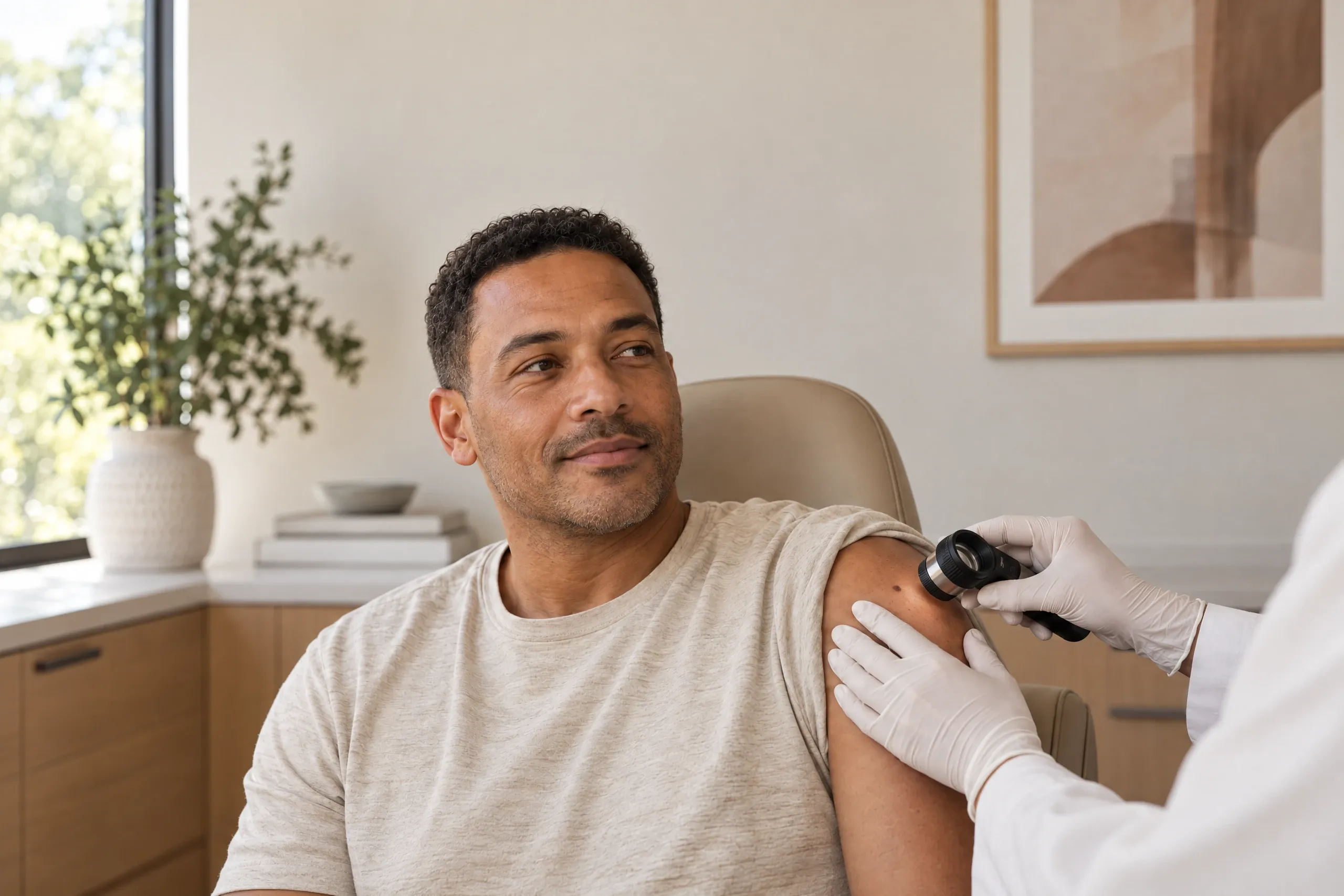
Mole removal in Atlanta, GA at SOCAH Center is led by a dermatologist, using a shave removal or a stitched excision. Every mole is examined with dermoscopy first, and tissue is sent for pathology when indicated.
Mole evaluations and removals are led by founder board-certified dermatologist Dr. Nikki D. Hill, MD, FAAD, a member of the American Society for Dermatologic Surgery who served as chief resident during her dermatology training at the University of Texas at Houston-MD Anderson Cancer Center. Her approach is diagnosis first, then the gentlest method that answers the medical question and protects your appearance. We see patients from Atlanta, Decatur, Brookhaven, Dunwoody and Tucker.
Medically reviewed by Dr. Nikki D. Hill, MD, FAAD. Last updated: October 2026.
Why It Matters
When a Mole Needs More Than a Second Glance
Peace of mind and comfort
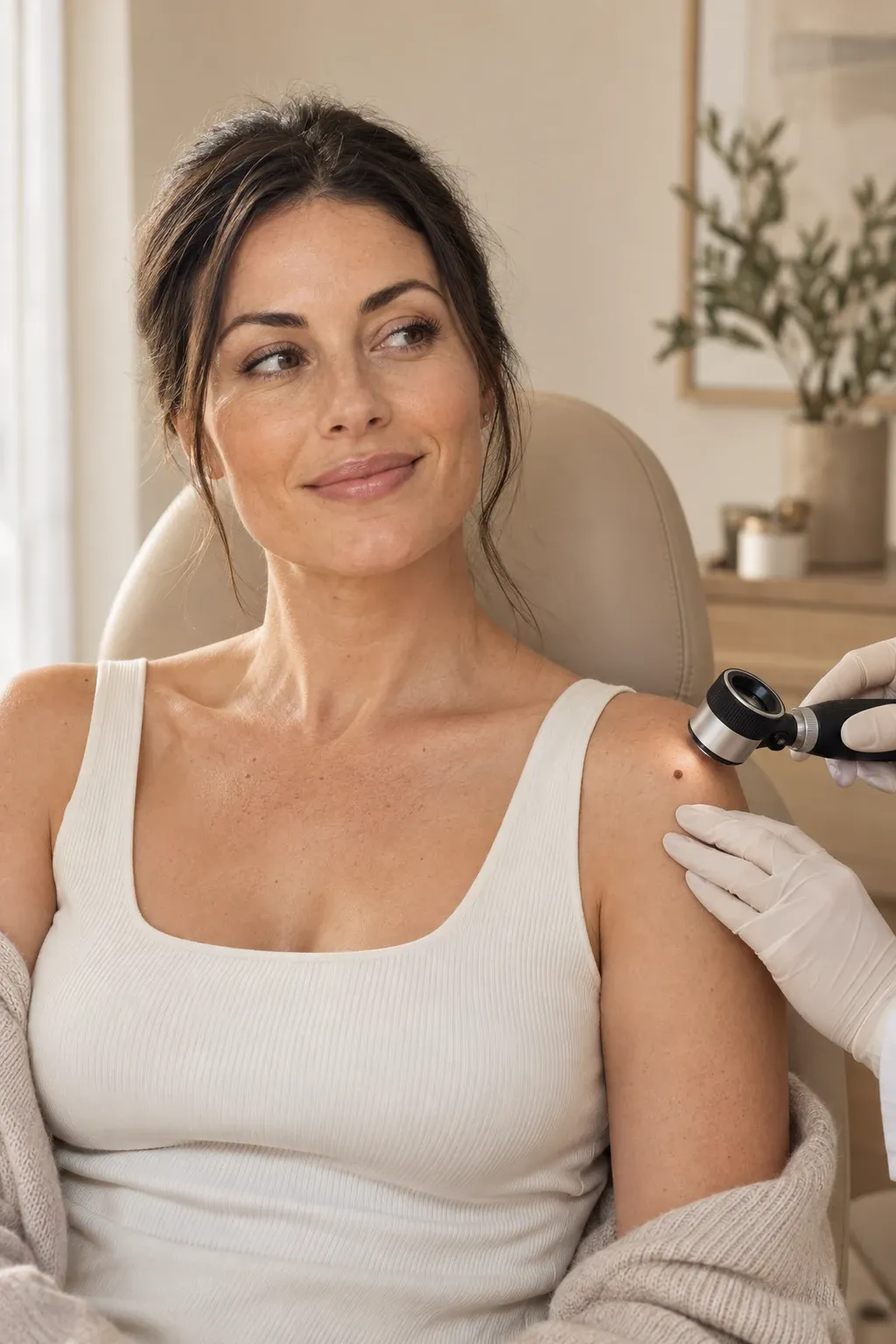
The problem. Most moles are harmless, but it is hard to tell a normal mole from an early melanoma by looking in a mirror. A mole that grows, changes color, itches or bleeds causes real worry. Other moles are benign but annoying: they catch on razors, bra straps or collars, or sit in a spot that affects how you feel about your face. Removing a mole at home or at a nonmedical spa can leave a scar and destroy the tissue a lab would need to rule out cancer.
The solution. A dermatologist evaluates the mole first, using dermoscopy and your history to decide whether it needs removal and which method fits. Shave removal flattens raised benign moles with no stitches. Surgical excision removes the full depth of a suspicious or deeper mole for a complete lab review. When pathology is needed, results guide any next step, and you leave with a clear answer, a clean wound and a plan for aftercare.
Understanding the Procedure
What Is Mole Removal?
Shave removal and surgical excision
Mole removal is a minor in-office surgical procedure that takes off a mole for medical or cosmetic reasons. It uses standard dermatologic surgical techniques rather than an FDA-approved product; the American Academy of Dermatology overview of moles explains how moles form.
After numbing, a shave removal uses a fine blade to remove a raised mole level with the skin and heals like a scrape. An excision removes the whole mole with a small margin and closes it with sutures for a thin line.
Treatment Timeline:
- Procedure Time:
- 20 to 45 minutes
- Back to Routine:
- A few days
- Pathology Results:
- About 1 to 2 weeks
- Healing:
- 1 to 3 weeks
Reasons for Removal
Moles We Evaluate and Remove
Common reasons patients come in
- Changing Moles
- Moles that grow, darken or change shape are checked first
- Atypical Moles
- Irregular moles are removed fully when a lab review is needed
- Raised Facial Moles
- Shave removal flattens benign moles with no stitches
- Irritated Moles
- Moles that catch on razors, straps or collars are removed
- Itching or Bleeding Moles
- Symptomatic moles are evaluated and sent to pathology
- Moles on Hands and Feet
- Spots on palms, soles and nails get careful dermoscopy
Benefits of Dermatologist Mole Removal
Answers and smooth skin
Mole Removal vs Alternatives
Shave removal and excision preserve tissue for a lab. Here is how they compare with laser, freezing, home products and monitoring.
| Option | How It Works | Procedure Time | Results | Pathology Possible | Downtime | Best For |
|---|---|---|---|---|---|---|
| Shave Removal | Blade removes a raised mole level with the skin, no stitches | 15 to 30 minutes | Flat, smooth skin | Yes | Scab for 1 to 2 weeks | Raised benign moles, often on the face |
| Surgical Excision | Full mole removed with a margin, closed with sutures | 30 to 45 minutes | Mole fully removed, thin line scar | Yes, full depth | Sutures out in 1 to 2 weeks | Suspicious, atypical or deeper moles |
| Laser Removal | Light energy breaks up pigment | Under 15 minutes | Lightening, may need repeats | No | Redness for days | Not advised for moles without a diagnosis |
| Cryotherapy | Liquid nitrogen freezes tissue | A few minutes | Unpredictable for moles | No | Blister for 1 to 2 weeks | Rarely used for moles |
| Monitoring With Mole Mapping | Photos and dermoscopy compared over time | 20 to 40 minutes | Changes detected early | Only if removed later | None | Many moles or high melanoma risk |









Is It Right for You
Who Is a Good Candidate for Mole Removal?
Medical and cosmetic reasons
Adults and children with a mole that looks unusual, has changed or causes daily irritation may be candidates, along with anyone who wants a benign mole removed for appearance after it has been evaluated. The American Academy of Dermatology guidance on mole diagnosis and treatment outlines when removal makes sense.
Ideal Candidates for Mole Removal
- Moles showing any ABCDE warning sign: asymmetry, irregular border, uneven color, diameter over 6 mm, or evolving
- A mole that itches, bleeds, crusts or looks different from your other moles
- New or changing dark spots on the palms, soles or under a nail
- Raised moles that catch on clothing, jewelry or razors
- Benign moles you would like removed for cosmetic reasons
Who Should Wait or Avoid Mole Removal
- Active infection or open skin at the site
- Blood thinners or bleeding disorders not yet reviewed with your provider
- Pregnancy, for purely cosmetic removal (suspicious moles are still evaluated)
- A strong keloid history, until technique is discussed
Melanoma occurs in every skin tone, and in deeper skin tones it often appears on the hands, feet and nails (acral melanoma). Use the AAD skin self-exam guide monthly, and book a full-body skin cancer screening in Atlanta if you have many moles or a family history of melanoma. Not every bump is a mole: soft flesh-colored flaps are treated with in-office skin tag removal, movable lumps under the skin with cyst removal, and small dark facial papules with DPN removal.
Your Visit
Mole Removal Step by Step
From evaluation to results
Evaluation
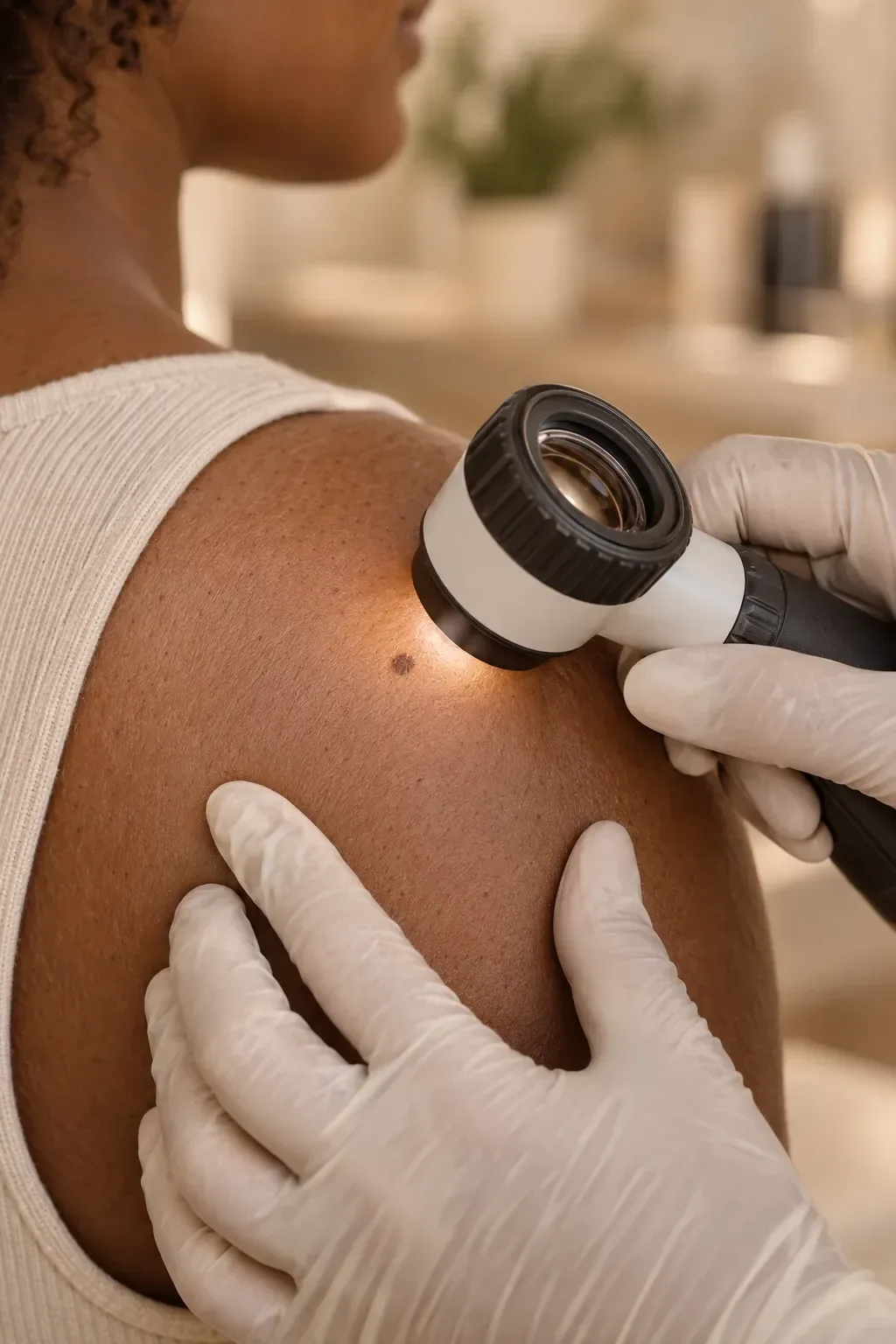
Dr. Hill reviews your history and examines the mole with dermoscopy to choose shave or excision.
Numbing
The area is cleansed and numbed with a small local anesthetic injection so the procedure is comfortable.
Removal
Dr. Hill shaves the mole level with the skin or excises it with a margin and places fine sutures.
Pathology
When indicated, tissue goes to a dermatopathology lab, and you are contacted with results.
Aftercare
You leave with a dressing, wound-care steps and a suture removal date if stitches were placed.
Mole Removal Side Effects and Safety
Mole removal is a low-risk procedure.
Common, Short-Lived Effects
Expect mild soreness, slight bleeding and a scab or suture line for one to two weeks.
Possible Risks
Possible effects include infection, a raised or widened scar, keloids in prone patients, lighter or darker skin at the site, and regrowth of pigment after shave removal (recurrent nevus), which is usually harmless but is checked again.
Safety and When to Call Us
Never remove a mole yourself; The American Academy of Dermatology warns against at-home mole removal products, which have caused scarring and delayed melanoma diagnoses. Call us for spreading redness, pus or fever.
Investment
Mole Removal Cost in Atlanta
What affects your investment
How Much Does Mole Removal Cost in Atlanta?
Cost depends on the number, size and location of moles, whether shave removal or surgical excision is used, closure complexity and whether pathology is needed. Dr. Hill reviews exact pricing at your evaluation before any procedure.
Insurance and Mole Removal
Removal of a suspicious, changing or symptomatic mole is often covered as medical care, and pathology is billed separately. Cosmetic removal of a benign mole is usually self-pay. Confirm coverage with your plan and see our accepted insurance plans.
Financing and Payment Options
For self-pay or out-of-pocket costs, CareCredit and Cherry offer monthly payment plans. Learn more about CareCredit and Cherry financing.
Why Choose SOCAH Center for Mole Removal in Atlanta, GA
Board-certified surgical care
Dr. Nikki D. Hill is a board-certified dermatologist and Fellow of the American Academy of Dermatology. She evaluates every mole before removal and plans technique with scarring, keloid tendency and pigment changes in mind.
Board-Certified Dermatologist
Evaluation and removal led by Dr. Hill
Dermoscopy Every Time
Each mole is examined before any removal decision
Pathology When Indicated
Lab review and a follow-up plan when results matter
Scar-Conscious Technique
Methods chosen to limit scarring and pigment changes
Surgical Training
Chief resident training at MD Anderson Cancer Center behind every removal
Children Welcome
Unusual or irritating moles evaluated in children as well as adults

Related Treatment
Skin Tag Removal
Fast, precise removal of skin tags by a dermatology team, with care for every skin tone.
- One Short Visit
- Minimal Scarring
- Accurate Diagnosis
Keloid Removal
Flatter, calmer keloid scars, with a plan built around how your skin heals.
- Combined Care
- Lower Recurrence
- Symptom Relief
Cyst Removal
Remove a bothersome cyst in one short office visit, with a small, carefully closed scar.
- About 30 Minutes
- Lower Return Risk
- Layered Closure
Mole Removal FAQs
How much does mole removal cost in Atlanta?
Does mole removal hurt?
How long does a mole removal appointment take?
What is the difference between shave removal and excision?
Will mole removal leave a scar?
When will I get my pathology results?
Can a mole grow back after removal?
How do I know if a mole is dangerous?
Is mole removal safe for every skin tone?
Can children and men have moles removed?
Can mole removal be done with a laser?
Schedule Your Mole Removal Consultation
References
- Rezk et al., Dermatol Surg. (2024). Dermoscopic-Guided Shave Removal of Acquired Facial Melanocytic Nevi in Dark-Skinned Individuals. PMID: 38662517.
- Castagna et al., An Bras Dermatol. (2017). The recurrent nevus phenomenon. PMID: 28954104.
- Zaiac et al., J Cosmet Dermatol. (2016). Local anesthesia injection technique for aesthetic removal of dermal nevi. PMID: 27329072.
- Abello-Poblete et al., Dermatol Surg. (2014). Histologic outcomes of excised moderate and severe dysplastic nevi. PMID: 24320231.
- Menzies, Dermatol Clin. (2013). Evidence-based dermoscopy. PMID: 24075541.
- Cyr, Am Fam Physician. (2008). Atypical moles. PMID: 18819240.