

Skin Cancer Screening in Atlanta, GA: Scalp-to-Toe Exams With Mole Mapping and Same-Visit Biopsy
- Exam Time:
- About 15-20 minutes
- Downtime:
- None, minimal after biopsy
- How Often:
- Yearly or as advised
- Biopsy:
- Same visit when needed

Early Detection
Skin cancer screening in Atlanta, GA is a full-body exam by a board-certified dermatologist to find skin cancer early, when treatment is simplest. At SOCAH Center, unusual spots get dermoscopy and, when needed, a same-visit biopsy.
Every screening at SOCAH Center is performed by Dr. Nikki D. Hill, MD, FAAD, a board-certified dermatologist and Fellow of the American Academy of Dermatology who served as chief resident during her dermatology training at the University of Texas at Houston-MD Anderson Cancer Center. As a hair loss expert, she checks the scalp section by section, where skin cancer is easy to miss at home. Screening is part of our medical dermatology care in Atlanta, so a suspicious finding moves straight into diagnosis and a treatment plan in the same office.
Medically reviewed by Dr. Nikki D. Hill, MD, FAAD. Last updated: October 2026.
Why Screen
Why a Skin Cancer Screening Matters
Find it early, treat it simply
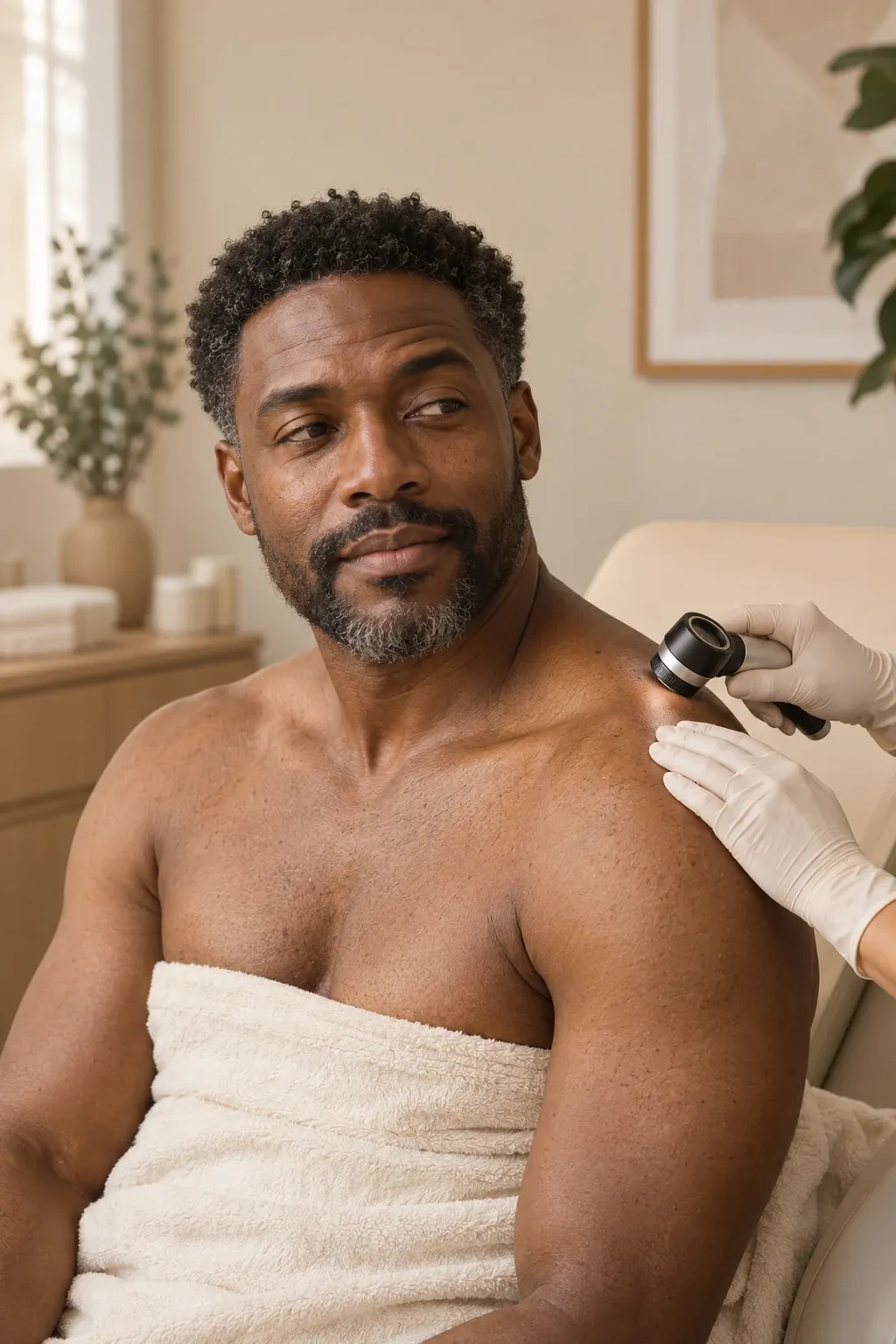
Most people never see large parts of their own skin: the scalp, the back, the backs of the legs, the soles and the skin under the nails. A new spot can grow for months unnoticed, and many people assume skin cancer only follows sunburns or only affects fair skin. That belief delays care. A dark nail streak, a sore that will not heal or a rough patch on an old scar can look harmless until it has had time to grow deeper.
A dermatologist screening closes those gaps. Good lighting, a trained eye and dermoscopy reveal patterns invisible without magnification, and mole mapping gives each watched spot a baseline for next time. When something looks suspicious, a same-visit biopsy answers the question quickly instead of leaving you to wonder. Early skin cancers are typically treated with a simple in-office procedure, and you leave with a plan.
Understanding the Exam
What Is a Skin Cancer Screening?
A head-to-toe look with dermoscopy
A skin cancer screening is a full-body exam for basal cell carcinoma, squamous cell carcinoma, melanoma and precancers such as actinic keratoses. It is a clinical exam, not a drug or device, so FDA approval does not apply. The American Academy of Dermatology urges prompt checks of new or changing spots.
Dr. Hill works from scalp to soles, looking for the ABCDE signs of melanoma and the mole that differs from its neighbors. Dermoscopy, a lighted magnifier, shows patterns beneath the surface, and mole mapping photos let each follow-up compare spots with their baseline.
Treatment Timeline:
- Exam Time:
- 15-20 minutes
- Recovery:
- None after the exam
- Biopsy Results:
- Typically 1-2 weeks
- Next Screening:
- Yearly or as advised
What We Look For
What a Skin Cancer Check Can Find
Six findings we screen for
- Melanoma
- Changing or unusual moles, including on palms, soles and nails
- Basal Cell Carcinoma
- Pearly or pigmented bumps and sores that do not heal
- Squamous Cell Carcinoma
- Scaly patches or firm bumps, including on scars and legs
- Actinic Keratoses
- Rough precancerous spots treated before they can progress
- Atypical Moles
- Irregular moles tracked through mole mapping over time
- Nail and Scalp Changes
- Dark nail streaks and scalp spots that are easy to miss at home
Benefits of a Professional Skin Check
Clarity and peace of mind
Skin Cancer Screening vs Other Skin Checks
Self-exams, apps and primary care checks each have a role. Here is how they compare with a dermatology screening.
| Option | Who Performs It | Areas Covered | Dermoscopy | Time | Biopsy Available | Best For |
|---|---|---|---|---|---|---|
| Dermatologist Skin Cancer Screening | Dermatologist | Scalp to toes, nails, soles | Yes | 15-20 min | Yes, same visit | Everyone, especially higher risk |
| Monthly Self Skin Exam | You or a partner | What you can see | No | 10 min | No | Spotting change between visits |
| Primary Care Skin Check | Primary care clinician | Mostly exposed skin | Sometimes | A few min | Often by referral | Routine checkups |
| Mole-Checking Apps | Phone software | Spots you photograph | No | Minutes | No | Reminders, not diagnosis |
| Total Body Photography | Imaging centers | Whole body photos | Often | 30-60 min | Not by itself | Many atypical moles |









Who Should Be Screened
Who Should Get a Skin Cancer Screening?
Every skin tone, every age group
Anyone can develop skin cancer, so a baseline screening suits most adults, and any new, changing or nonhealing spot deserves a prompt visit.
Ideal Candidates for Skin Cancer Screening
- Adults who have never had a full-body skin exam
- Anyone with a personal or family history of skin cancer or melanoma
- People with many moles, atypical moles or a mole that is changing
- Those with past blistering sunburns, tanning bed use or immune-suppressing medicines
- Anyone with a dark nail streak, a new spot on a palm or sole, or a sore on a scar
Who Should Wait or Avoid Skin Cancer Screening
- No one needs to avoid the noninvasive exam itself
- A biopsy may be postponed if the area has an active infection
- Tell us about blood thinners before a biopsy, and never stop them without your prescriber
Skin Cancer in Every Skin Tone
Acral Melanoma Awareness
Acral lentiginous melanoma grows on the palms, soles and under the nails. It is not driven by sun, and it is the most common melanoma type in deeper skin tones, although anyone can develop it. Watch for a new or changing dark spot on a palm or sole, a nail streak that widens or darkens, or pigment spreading onto the skin around a nail. Dr. Hill checks these areas at every screening, so please remove nail polish before your exam.
If a benign growth bothers you, ask about mole removal in Atlanta, skin tag removal or treatment for sun and age spots.
Your Visit
Your Skin Cancer Screening, Step by Step
What happens in the exam room
Health History
Dr. Hill reviews your sun history, past biopsies, family history and any spot that worries you.
Scalp-to-Toe Exam
In a gown, you are examined from scalp to soles, including the ears, nails, palms and between the toes.
Dermoscopy
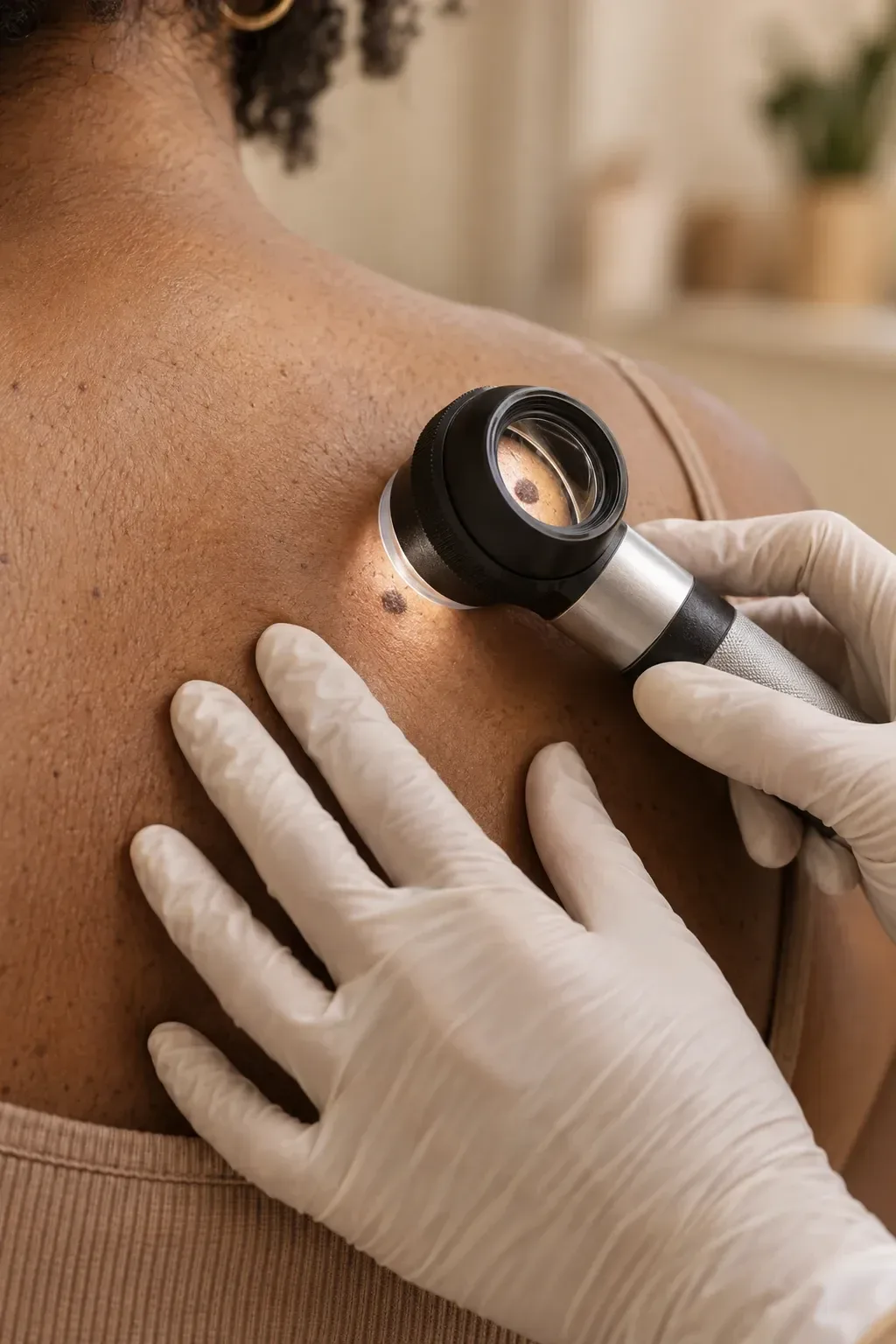
Dr. Hill views unusual spots with a lighted dermatoscope to see pigment and vessel patterns below the surface.
Mole Mapping
Moles worth watching are photographed and charted so future screenings compare each one to its baseline.
Same-Visit Biopsy
If a spot needs testing, Dr. Hill numbs it and takes a small sample, then explains the next steps.
Is Skin Cancer Screening Safe?
The screening itself is noninvasive and painless, with no recovery time. Any risk comes from a biopsy, a minor procedure done under local anesthesia.
Common Effects After a Biopsy
After a biopsy, expect mild tenderness, a small scab and some pinkness for a week or two.
Less Common Effects
Less common effects include bleeding, infection, a lighter or darker mark at the site and, in people prone to them, a raised scar. If you form keloids, tell us, and know that keloid treatment is available if one forms.
When to Call Us and Daily Protection
Call the office if the site becomes increasingly red, warm, swollen or draining. The MedlinePlus guide to skin lesion biopsy explains the procedure, and the FDA sun safety tips cover daily protection between screenings.
Cost
Skin Cancer Screening Cost in Atlanta
Insurance, payment and financing
How Much Does Skin Cancer Screening Cost in Atlanta?
Cost depends on your insurance plan, whether the visit is preventive or focused on a specific spot, and whether a biopsy is needed. Pathology is billed separately by the laboratory. Exact pricing is discussed at your consultation, before any procedure.
Insurance and Skin Cancer Screening
Skin exams and medically necessary biopsies are often covered by insurance, subject to your deductible and copay. Review our accepted insurance plans and ask your plan how it covers screening. Self-pay patients are welcome.
Financing and Payment Options
For deductibles and self-pay visits, SOCAH Center offers CareCredit and Cherry. See our payment and financing options.
Why Choose SOCAH Center for Skin Cancer Screening in Atlanta, GA
Board-certified care in Northlake
Dr. Hill brings the discipline of her training at MD Anderson Cancer Center to every screening. Because the practice keeps a smaller patient load, visits are unhurried, with time to examine every area and to answer every question before you leave.
Board-Certified Dermatologist
Exams by Dr. Hill, a Fellow of the American Academy of Dermatology
Every Skin Tone Examined
Trained to recognize how skin cancer appears across all skin tones
Scalp Expertise
A hair loss specialist who parts and checks the scalp section by section
Diagnosis to Treatment
Biopsy, removal and follow-up planning under one roof in Atlanta
Unhurried Exams
A smaller patient load means time to examine every area and answer every question
MD Anderson Training
Chief resident training at MD Anderson Cancer Center shapes every screening

Related Treatment
Skin Tag Removal
Fast, precise removal of skin tags by a dermatology team, with care for every skin tone.
- One Short Visit
- Minimal Scarring
- Accurate Diagnosis
Mole Removal
Every mole is evaluated first, then removed with the method that suits it and your skin.
- Diagnosis First
- Lab Answers
- No-Stitch Option
Keloid Removal
Flatter, calmer keloid scars, with a plan built around how your skin heals.
- Combined Care
- Lower Recurrence
- Symptom Relief
Skin Cancer Screening FAQs
How much does a skin cancer screening cost?
How long does a full body skin exam take?
Does a skin cancer screening hurt?
How soon will I get my biopsy results?
How often should I get a skin cancer check?
Is a dermatologist screening better than checking my own skin?
Can people with deeper skin tones get skin cancer?
What is mole mapping?
Should men, teens and children be screened?
Schedule Your Skin Cancer Screening Consultation
References
- Rojas et al., J Am Acad Dermatol. (2022). Skin cancer: Primary, secondary, and tertiary prevention. Part II. PMID: 35176398.
- Jaimes et al., G Ital Dermatol Venereol. (2012). An update on risk factors, prognosis and management of melanoma patients. PMID: 22370565.
- Thakker et al., J Am Acad Dermatol. (2026). Acral lentiginous melanoma. Part I. Epidemiology, etiology, clinical presentation, and diagnosis. PMID: 39793708.
- Goydos et al., Cancer Treat Res. (2016). Acral Lentiginous Melanoma. PMID: 26601870.
- Nakamura et al., Curr Treat Options Oncol. (2018). Diagnosis and Management of Acral Lentiginous Melanoma. PMID: 29951919.