

Urinary Incontinence Treatment in Atlanta, GA: Rebuilding Pelvic Floor Strength, Fully Clothed
Regain bladder confidence with non-invasive pelvic floor care that fits a busy schedule.
- Common In:
- Women after childbirth or in menopause, and men with prostate-related changes
- Primary Causes:
- A weak pelvic floor, pregnancy and delivery, lower estrogen and an overactive bladder
- Treatment Time:
- About 28 minutes per Emsella session, fully clothed, in a short series
- Results:
- Often noticed within the first sessions and building for weeks; individual results vary


What Is Urinary Incontinence?
Common, Treatable and Rarely Discussed
Urinary incontinence is the accidental loss of urine. It ranges from a few drops when you laugh to a sudden urge you cannot hold. It is common in women and men of every age, background and body type, yet many people wait years to mention it, assuming leaks are simply part of having children or getting older. They are common, and they are treatable.
Three types account for most cases. Stress incontinence is leakage with pressure on the bladder, such as coughing, sneezing, running or jumping. Urge incontinence is a sudden need to go followed by leakage, often with frequent trips to the bathroom. Mixed incontinence combines both. The MedlinePlus overview of urinary incontinence explains each type in plain language.
At the center of most stress and mixed incontinence is the pelvic floor, a hammock of muscles that supports the bladder and helps keep the urethra closed. When those muscles weaken, leaks follow. See our list of conditions we treat for related wellness concerns.
Medically reviewed by Dr. Nikki D. Hill, MD, FAAD. Last updated: October 2026.
Why Bladder Control Changes
Pregnancy, Menopause and Prostate Health
01The Science
Pregnancy and vaginal delivery stretch and sometimes injure the pelvic floor, which is why leaks often begin postpartum. In perimenopause and menopause, lower estrogen thins the tissue around the urethra and weakens support. In men, leakage often follows prostate surgery or develops with an overactive bladder.
Because a weak pelvic floor sits behind so many of these causes, rebuilding it is a central treatment. Kegel exercises help many people, though studies suggest a large share of patients struggle to contract the right muscles on their own. Emsella chair sessions for bladder control use high-intensity focused electromagnetic energy to trigger thousands of deep pelvic floor contractions while you sit fully clothed, building strength you could not easily reach with exercise alone.
The pelvic floor works as part of the core. Patients rebuilding after pregnancy may also benefit from abdominal muscle toning with Emsculpt Neo or the SOCAH Functional Wellness strength program, and our page on abdominal separation after pregnancy explains how core and pelvic recovery connect.
02Evaluation at SOCAH
How We Evaluate Bladder Leakage
And When to See a Specialist
Your consultation begins with a detailed history: when leaks happen, how often, how many pads you use, your pregnancies, menopause status, prostate history, medicines and fluid habits. A short bladder diary helps sort stress, urge and mixed patterns. We also screen for implants and other factors that affect whether Emsella is safe for you.
Some symptoms need a urologist or urogynecologist first. These include blood in the urine, pain or burning, fever, repeated urinary infections, a feeling that the bladder never empties, a bulge in the vagina, new numbness or weakness in the legs, or leaks that began suddenly. We refer when anything suggests a cause beyond pelvic floor weakness and coordinate care with your specialist.
When pelvic floor weakness drives your symptoms, non-invasive pelvic floor strengthening with Emsella is typically a strong fit. Cost depends on how many sessions you need, and exact pricing is discussed at your consultation. CareCredit and Cherry financing can spread the cost.
What Causes Urinary Incontinence?
Most people have more than one of these factors, which is why a full history matters.
- 01Pregnancy and ChildbirthCarrying and delivering a baby stretches and can injure pelvic floor muscles.
- 02MenopauseLower estrogen thins urethral and pelvic tissue and weakens bladder support.
- 03Prostate ChangesProstate surgery or enlargement can affect the muscles that control urine flow in men.
- 04Overactive BladderThe bladder muscle contracts too early, creating sudden urges and leaks.
- 05Repeated PressureChronic cough, heavy lifting, high-impact exercise and constipation strain the pelvic floor.

Why Choose SOCAH Center for Urinary Incontinence Care in Atlanta, GA
Our SOCAH Suite wellness services run under the supervision of board-certified dermatologist Dr. Nikki D. Hill, with careful screening before every series. Patients from Atlanta, Tucker, Decatur and Stone Mountain choose our Northlake office for discreet, fully clothed pelvic floor care.
- Fully Clothed Sessions
- No undressing, no probes and no recovery, so care fits into a workday.
- Women and Men
- Plans for postpartum, menopausal and prostate-related leakage alike.
- Careful Screening
- Red-flag symptoms are referred to urology or urogynecology before treatment.
- Discreet Setting
- A private, respectful room where every question is welcome.

Urinary Incontinence Treatment Options at SOCAH Center
Every plan uses the Emsella chair. Your schedule depends on the type of leakage, its severity and your recovery stage.
| Treatment | Protocol | Best For | Session Time | Results Timeline |
|---|---|---|---|---|
| Pelvic Floor Therapy with Emsella | Stress incontinence series | Leaks with coughing, lifting or exercise | About 28 minutes | Often noticed within the first sessions |
| Pelvic Floor Therapy with Emsella | Urge and mixed incontinence series | Sudden urges with or without stress leaks | About 28 minutes | Builds over several weeks |
| Pelvic Floor Therapy with Emsella | Postpartum recovery plan | Leaks after childbirth, once cleared by your obstetric provider | About 28 minutes | Builds over several weeks |
| Pelvic Floor Therapy with Emsella | Maintenance sessions | Keeping strength after a completed series | About 28 minutes | Sustains earlier improvement |
Signs You Have Urinary Incontinence
Any of these signs is worth discussing with a provider. The National Institute of Diabetes and Digestive and Kidney Diseases offers more on bladder control problems.
Leaks With Pressure
Urine escapes when you cough, sneeze, laugh, lift or jump.
Sudden Strong Urges
You feel an urgent need to go and sometimes do not reach the bathroom in time.
Frequent Bathroom Trips
You urinate more than about eight times a day or wake at night to go.
Relying on Pads
You wear pads or dark clothing just in case, or plan outings around restrooms.
Avoiding Exercise
You skip running, jumping or workout classes because of leakage.
Dribbling After Urinating
Men may notice drops of urine after finishing, especially after prostate treatment.


Related Treatment
Pelvic Floor Therapy with Emsella
Better bladder control and pelvic strength while you sit, with no undressing and no downtime.
- Fully Clothed
- Nothing Inserted
- Deep Contractions
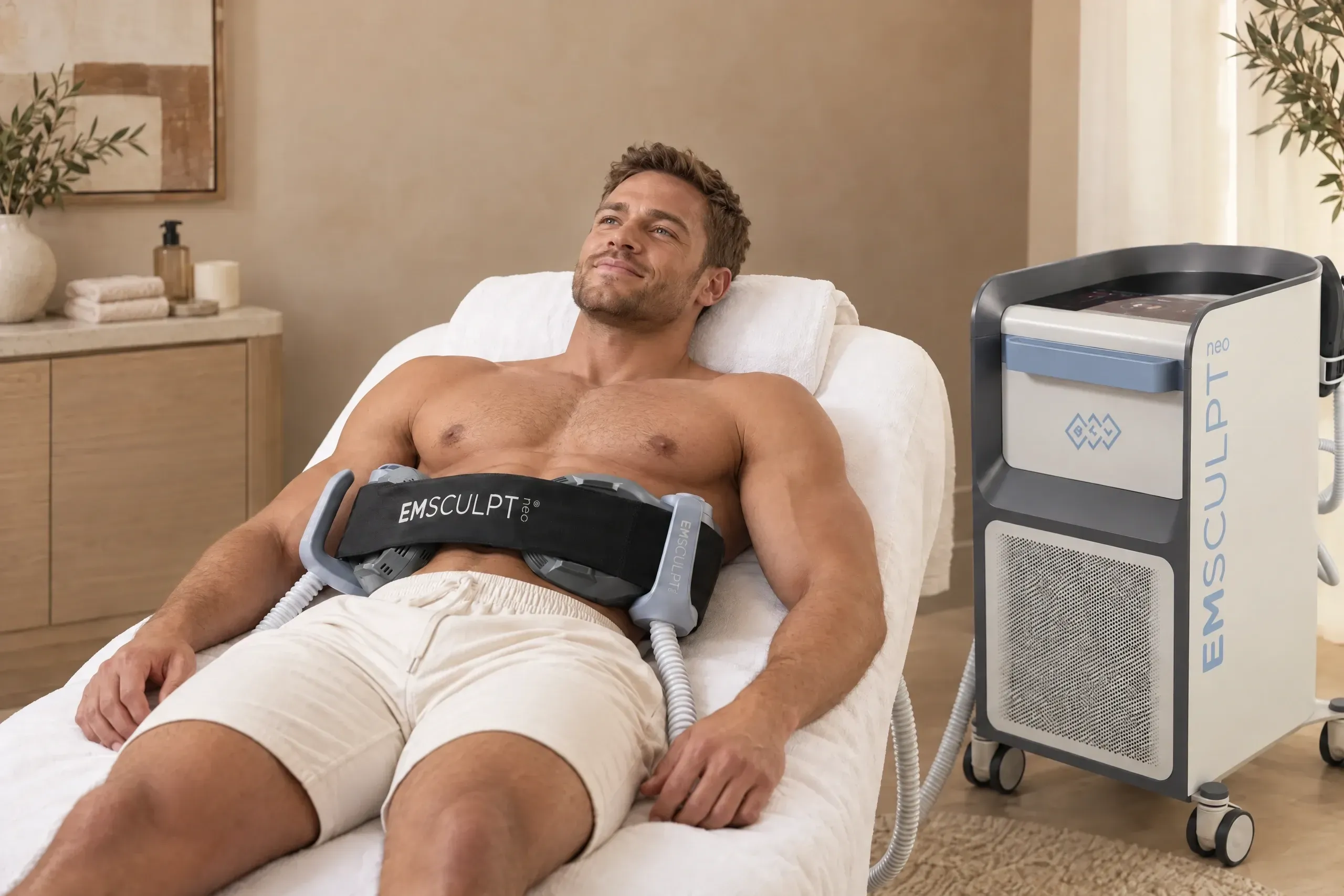
Body Contouring with Emsculpt Neo
Noninvasive muscle building and fat reduction, with no surgery, needles or downtime.
- Fat and Muscle
- No Surgery
- No Downtime
Skin Tightening with EMFACE
Lift, firm and tone the face and jawline with no needles, no toxins and no downtime.
- Skin and Muscle
- No Needles
- No Downtime
Frequently Asked Questions
What is the best treatment for urinary incontinence without surgery?
Do I have to undress for Emsella?
How many sessions does urinary incontinence treatment take?
Can men get treatment for bladder leakage?
Is leaking after having a baby normal?
When should I see a urologist or urogynecologist?
How much does urinary incontinence treatment cost?
Schedule Your Urinary Incontinence Treatment Consultation
Scientific References
- Leonardo et al., Neurourol Urodyn. (2025). Noninvasive High-Intensity Focused Electromagnetic Therapy in Women With Urinary Incontinence: A Systematic Review and Meta-Analysis. PMID: 39760417.
- Peng et al., Medicine (Baltimore). (2019). Magnetic stimulation for female patients with stress urinary incontinence, a meta-analysis of studies with short-term follow-up. PMID: 31083230.
- Lim et al., J Urol. (2017). Pulsed Magnetic Stimulation for Stress Urinary Incontinence: 1-Year Followup Results. PMID: 27871927.
- Barba et al., Medicina (Kaunas). (2023). Flat Magnetic Stimulation for Urge Urinary Incontinence. PMID: 38004048.
- Roziana et al., Narra J. (2025). Improving pelvic floor muscle strength in women with postpartum stress urinary incontinence using electromagnetic stimulation therapy: A randomized controlled trial. PMID: 40352220.