

Nail Fungus Treatment in Atlanta, GA: Clearing Thickened, Discolored and Separating Nails
- Treatment Time:
- 15-30 minute visits
- Downtime:
- None
- Results Last:
- Long term with prevention
- FDA Status:
- FDA-approved medicines

Nail Care Specialists
Nail fungus treatment in Atlanta, GA at SOCAH Center starts by confirming the cause, since bacterial infections can look like fungus. We test the nail, then build a plan with prescription oral or topical therapy and steps to prevent its return.
Every nail plan at our Northlake office is directed by Dr. Nikki D. Hill, MD, FAAD, a board-certified dermatologist and Fellow of the American Academy of Dermatology who founded SOCAH Center in 2015. Our medical dermatology team treats babies, children, teens and adults, and we look at the whole picture, including footwear, sports, diabetes, circulation and work that keeps your hands wet, so treatment fits your health and your routine.
Medically reviewed by Dr. Nikki D. Hill, MD, FAAD. Last updated: October 2026.

The Challenge
Why Nail Fungus Treatment Starts With a Diagnosis
Understanding Nail Infections
A nail infection rarely announces itself. It starts as a small white or yellow streak at the tip of a toenail, then the nail thickens, turns yellow, brown or chalky, and crumbles at the edge. Shoes press on it, trimming gets difficult, and many patients hide their feet in sandal season. Store-bought creams barely reach the infection under the nail plate, and nail psoriasis, injury or a bacterial infection can look almost identical, so months pass with the wrong product.
Effective care begins with a sample. Your provider clips or scrapes the nail and sends it to the lab to confirm a fungus and identify the type, which guides the choice of medicine. Confirmed infections are treated with a prescription oral antifungal, a medicated nail solution or both, while thick nails are trimmed and thinned in the office. A clear nail then grows in from the base over the following months, and a simple prevention routine helps keep it that way.
Understanding Your Treatment
What Is Nail Fungus Treatment?
How Antifungal Therapy Reaches the Nail
Nail fungus treatment is medical care for onychomycosis, a nail infection usually caused by dermatophytes (the fungi behind athlete's foot), using FDA-approved oral antifungals such as terbinafine or FDA-approved topical nail solutions. The AAD advises confirming the diagnosis first.
Oral medicine reaches the nail matrix, the growth center under the cuticle, through the bloodstream. A healthy nail then grows out as the damaged part is trimmed away, over 4 to 6 months on fingers and 12 to 18 months on toes.
Treatment Timeline:
- First Signs:
- Clear nail at the cuticle in 2-3 months
- Full Effect:
- 12-18 months for toenails (4-6 for fingernails)
- Treatment Time:
- 15-30 minutes (per office visit)
- Recovery:
- None (normal activity right away)
Conditions We Treat
Nail Infections We Treat in Atlanta
Fungal, Yeast and Bacterial Causes
- Toenail Fungus
- Thick, yellow or crumbly toenails from a dermatophyte infection
- Fingernail Fungus
- Discolored, lifting fingernails, often from yeast in wet-work jobs
- Acute Paronychia
- Sudden red, painful swelling of the nail fold from bacteria
- Chronic Paronychia
- Long-lasting nail fold swelling in hands that are often wet
- Green Nail Syndrome
- Green or black staining from Pseudomonas bacteria under the nail
- Nail Lifting
- Nail separating from the bed (onycholysis) from infection or injury
Benefits of Nail Fungus Treatment
Why Medical Care Works Better
Nail Fungus Treatment vs Alternatives
How a dermatologist-directed plan compares with single-product approaches for fungal nail infections.
| Treatment | How It Works | Time Commitment | When Nails Improve | Course Length | Downtime | Best For |
|---|---|---|---|---|---|---|
| SOCAH Center Nail Plan | Lab-confirmed diagnosis plus matched therapy | 15-30 minute visits | Clear growth in 2-3 months | Based on the plan | None | Any suspected nail infection |
| Oral Terbinafine | Pill reaches the nail through the bloodstream | Daily pill | Clear growth in 2-3 months | 6-12 weeks | None | Moderate to severe infections |
| Topical Antifungal Lacquer | Medicated solution brushed onto the nail | Daily at home | Gradual, over months | Close to a year | None | Mild infections |
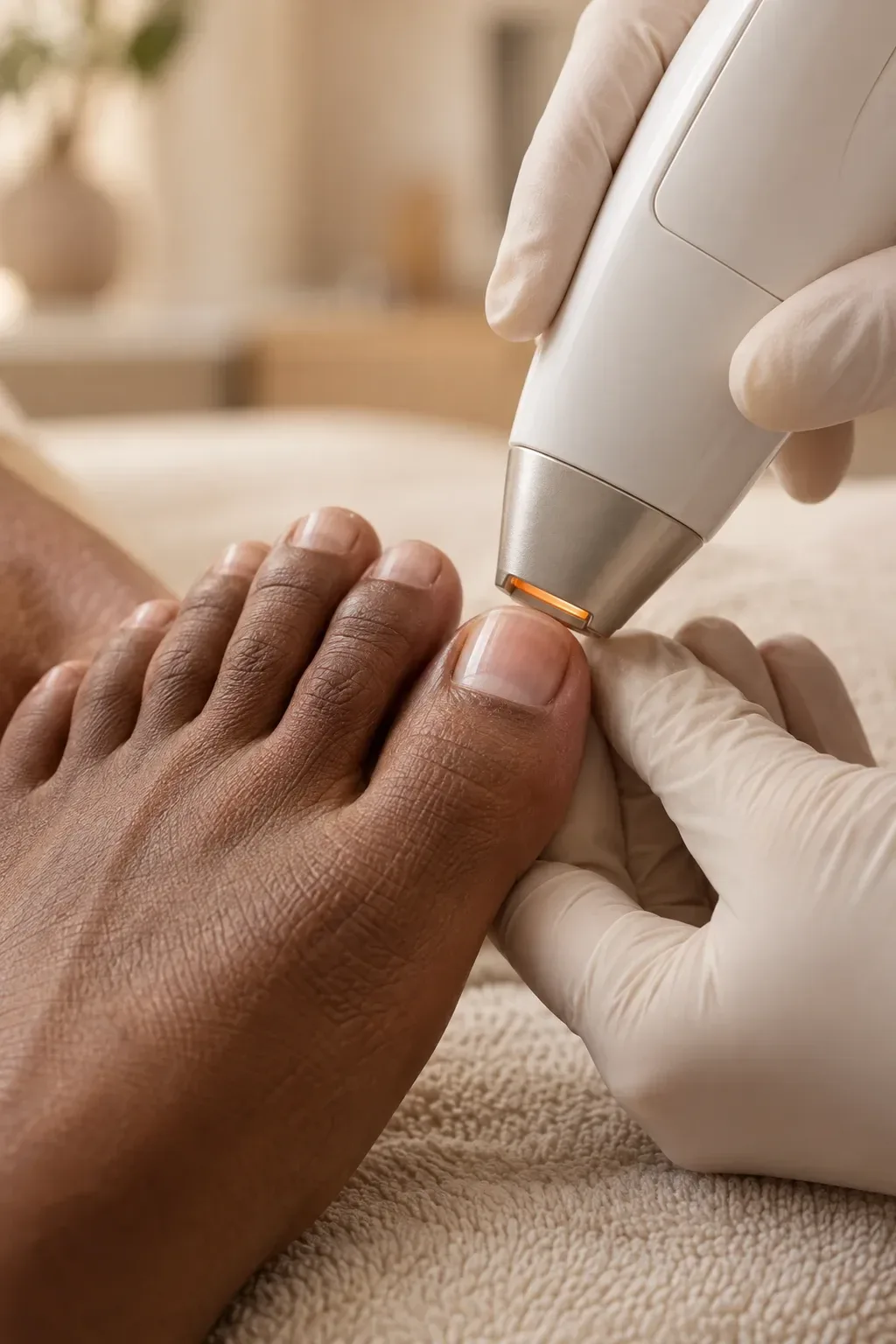
| Laser Nail Treatment | Light energy heats the nail | Several sessions | Variable | Often repeated | None | Those avoiding pills (limited evidence) |
| Over-the-Counter Antifungals | Skin creams that barely penetrate nails | Daily at home | Rarely clears nails | Ongoing | None | Athlete's foot on nearby skin |









Candidacy
Who Is a Good Candidate for Nail Fungus Treatment?
Matching Therapy to Your Health
Most adults and children with a confirmed nail infection can be treated. The best option depends on how many nails are involved, how deep the infection reaches and your overall health.
Ideal Candidates for Nail Fungus Treatment
- Thick, discolored, crumbly or lifting toenails or fingernails
- Runners, gym-goers and athletes with recurring athlete's foot
- People with diabetes or poor circulation
- Patients whose nails stayed infected after over-the-counter products
- Anyone with red, swollen, painful skin around a nail (paronychia)
Who Should Wait or Avoid Nail Fungus Treatment
- Pregnancy or breastfeeding (oral antifungals are usually postponed)
- Active or chronic liver disease, for oral terbinafine or itraconazole
- Congestive heart failure, for itraconazole
- Medicines with significant interactions, until reviewed
- A new dark streak in the nail, which needs evaluation for other causes first
A dark nail band is not typical of fungus and may need a skin cancer screening. If the skin around your nails keeps flaring, a skin rash evaluation with patch testing can uncover a contact allergy.
Your Visit
Nail Fungus Treatment Step by Step
From Testing to a Clear Nail
Nail Exam
Your provider examines every nail and the skin around it, often with dermoscopy, and reviews your history.
Lab Sample
Nail clippings or scrapings go to the lab to confirm fungus, yeast, mold or bacteria.
Office Care
Thick nails are trimmed and thinned, and a paronychia abscess is numbed and drained if needed.
Prescription Plan
Dr. Hill's team prescribes oral or topical therapy and orders lab monitoring when appropriate.
Follow-Up
Progress checks every few months, in person or by video, until a clear nail grows in.
Nail Fungus Treatment Side Effects and Safety
Most patients tolerate nail fungus treatment well.
Oral Medicines
Oral terbinafine can cause stomach upset, headache, rash or a temporary change in taste or smell, and it rarely affects the liver, so we review your medicines and may order blood work before and during therapy. Itraconazole interacts with many prescriptions.
Topical Solutions
Topical solutions may cause mild redness or peeling around the nail. The National Library of Medicine terbinafine guide lists warnings in detail.
When to Call Us
Call us right away if you notice yellowing skin, dark urine, unusual tiredness or a spreading rash.
Investment
Nail Fungus Treatment Cost in Atlanta
Coverage and Payment Options
How Much Does Nail Fungus Treatment Cost in Atlanta?
Cost depends on the number of nails involved, lab testing, oral or topical medicine, any monitoring blood work and the number of follow-up visits. Exact pricing will be discussed during your consultation.
Insurance and Nail Fungus Treatment
Nail infections are a medical condition, so office visits and lab tests are often covered, subject to your copay and deductible. Check our accepted insurance plans, including Anthem Blue Cross Blue Shield, Aetna, Cigna, Humana, UnitedHealthcare and Medicare, before your visit.
Financing and Payment Options
Self-pay patients and anyone covering deductibles can use CareCredit or Cherry. Learn how to apply on our financing and payment options page.
Why Choose SOCAH Center for Nail Fungus Treatment in Atlanta, GA
Dermatology-Led Nail Care
Dr. Hill and her team treat nails as part of whole-patient dermatology. We confirm the diagnosis, rule out conditions that mimic fungus, and match treatment to your health history, so you are not spending months on products that cannot reach the infection.
Board-Certified Oversight
Care directed by a board-certified dermatologist and AAD Fellow
Testing Before Treating
Lab confirmation guides the right medicine for the organism
Whole-Body View
Diabetes, circulation and medications factored into each plan
All Ages Welcome
Nail care for babies, children, teens and adults in one practice
In-Network Plans
Anthem, Aetna, Cigna, Humana, UnitedHealthcare and Medicare accepted
Safe Oral Therapy
Liver and health history reviewed and monitored when oral antifungals are used

Related Treatment
Skin Tag Removal
Fast, precise removal of skin tags by a dermatology team, with care for every skin tone.
- One Short Visit
- Minimal Scarring
- Accurate Diagnosis
Mole Removal
Every mole is evaluated first, then removed with the method that suits it and your skin.
- Diagnosis First
- Lab Answers
- No-Stitch Option
Keloid Removal
Flatter, calmer keloid scars, with a plan built around how your skin heals.
- Combined Care
- Lower Recurrence
- Symptom Relief
Frequently Asked Questions About Nail Fungus Treatment
How much does nail fungus treatment cost at SOCAH Center?
How long does nail fungus treatment take?
Does treating nail fungus hurt?
When will I see results from nail fungus treatment?
Can nail fungus come back after treatment?
Is prescription treatment better than over-the-counter products?
What is paronychia, and how is it treated?
Can children and teens get nail fungus treatment?
Does nail fungus look different on different skin tones?
Schedule Your Nail Fungus Treatment Consultation
References
- Lipner et al., J Am Acad Dermatol. (2019). Onychomycosis: Treatment and prevention of recurrence. PMID: 29959962.
- Frazier et al., Am Fam Physician. (2021). Onychomycosis: Rapid Evidence Review. PMID: 34652111.
- Leung et al., Recent Pat Inflamm Allergy Drug Discov. (2020). Onychomycosis: An Updated Review. PMID: 31738146.
- Nenoff et al., J Dtsch Dermatol Ges. (2023). S1 Guideline onychomycosis. PMID: 37212291.
- Leggit, Am Fam Physician. (2017). Acute and Chronic Paronychia. PMID: 28671378.
- Rigopoulos et al., Am Fam Physician. (2008). Acute and chronic paronychia. PMID: 18297959.