

Diastasis Recti Treatment in Atlanta, GA: Closing the Gap and Rebuilding Core Strength Without Surgery
A stronger, steadier core after pregnancy or heavy training, built step by step.
- Common In:
- People during and after pregnancy, plus men who lift heavy or carry abdominal weight
- Primary Causes:
- Stretching of the midline tissue from pregnancy, strain and abdominal pressure
- Treatment Time:
- About 30 minutes per Emsculpt Neo session, typically about 4 sessions
- Results:
- Core strength builds over about 3 months; change in the gap varies by person


What Is Diastasis Recti?
More Than a Postpartum Belly
Diastasis recti is a widening of the gap between the two halves of the rectus abdominis, the "six-pack" muscles that run down the front of the abdomen. The muscles are joined by a band of connective tissue called the linea alba. When that band stretches and thins, the muscles drift apart, the abdomen can bulge or dome along the midline, and the core loses some of its ability to support the spine and pelvis.
It is best known after pregnancy, when a growing uterus stretches the abdominal wall, and many people still have a measurable gap months or years later. It also occurs in men, especially weightlifters who strain without bracing well and people who carry weight around the middle. The separation itself is not dangerous, but it can contribute to back discomfort, a persistent belly pooch and a core that feels weak. Browse our conditions we treat for related wellness concerns.
Medically reviewed by Dr. Nikki D. Hill, MD, FAAD. Last updated: October 2026.
Why the Abdominal Muscles Separate
Pressure, Stretch and Recovery
01The Science
Anything that raises pressure inside the abdomen for long periods can stretch the linea alba. Pregnancy is the most common cause, especially with twins, a large baby or pregnancies close together. Heavy lifting with breath-holding, chronic coughing and abdominal weight gain add strain, and some people inherit more elastic connective tissue. The MedlinePlus entry on diastasis recti summarizes how it forms.
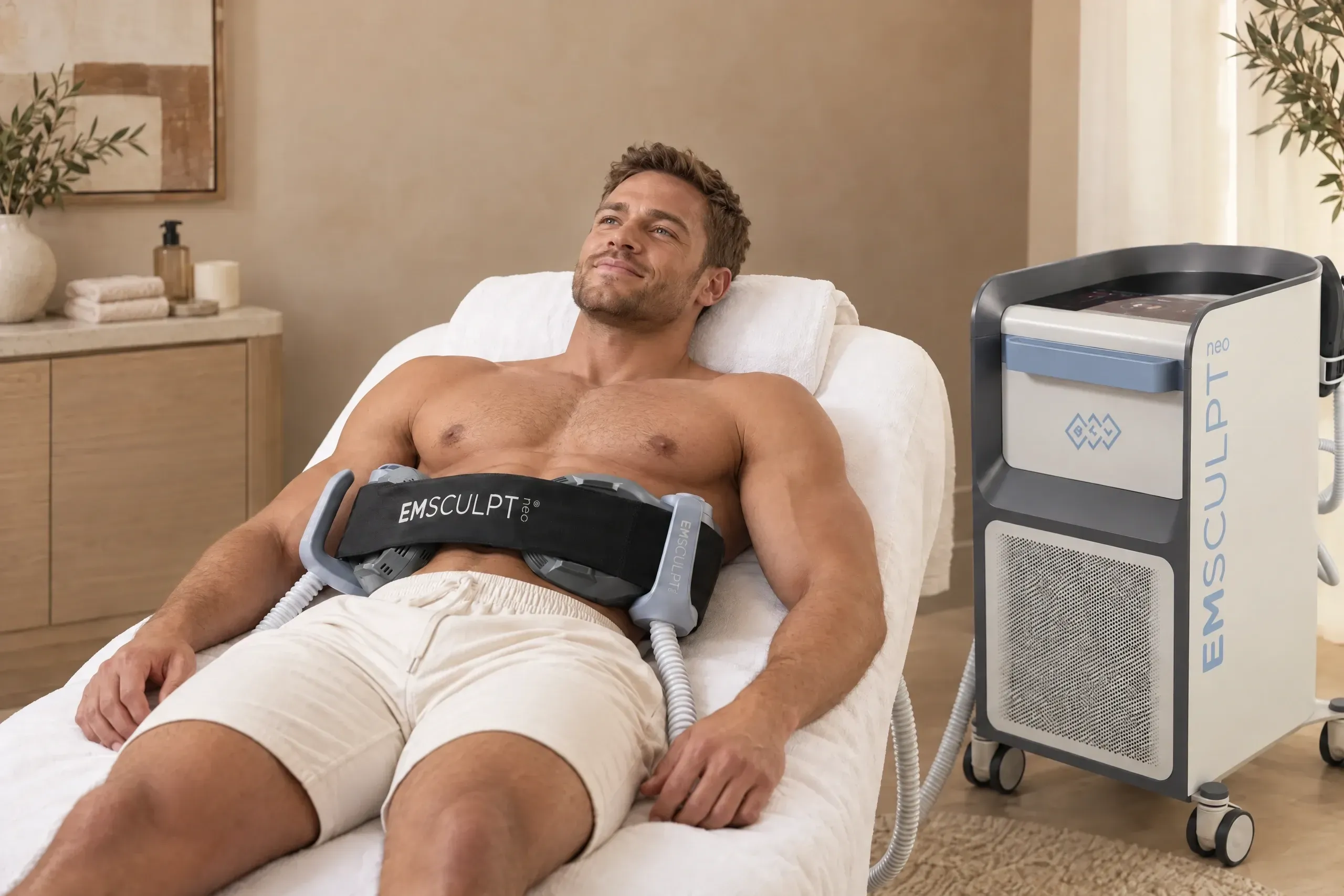
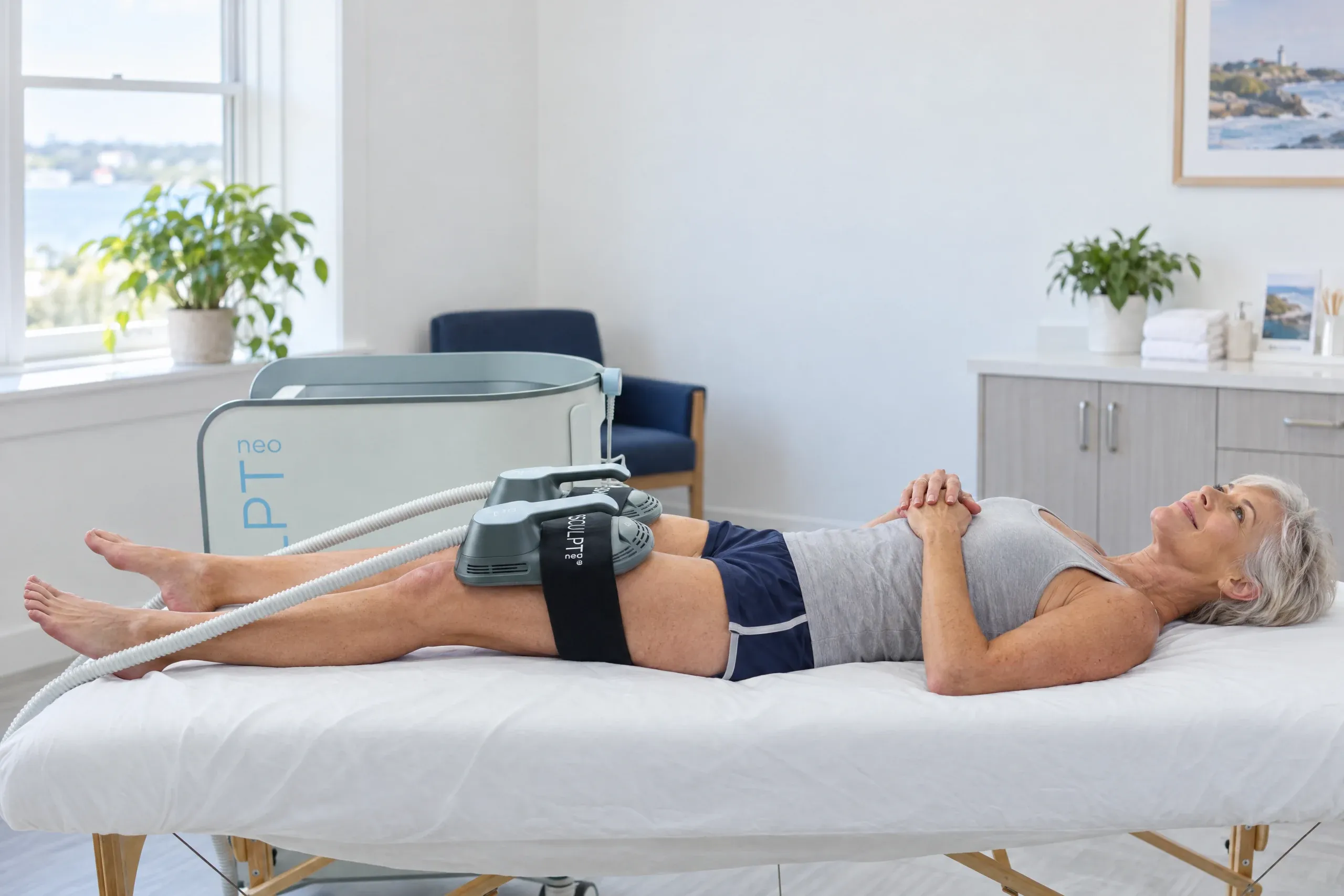
Treatment starts with conservative core re-education: learning to engage the deep transverse abdominis, coordinate breathing with the pelvic floor and load the core gradually. Our treatments then build on that foundation. Emsculpt Neo core strengthening uses HIFEM energy for intense abdominal contractions plus radiofrequency to reduce stubborn fat, and the SOCAH Functional Wellness program for core stability targets the core, spine and pelvic floor to support posture and movement.
The pelvic floor is the base of the core, and many postpartum patients also notice leaks. Emsella pelvic floor sessions can be added to rebuild that support, and our guide to bladder leakage after pregnancy explains how.
02Evaluation at SOCAH
How We Assess Your Core
Starting With a Simple Self-Check
You can get a rough sense of a separation at home before your visit:
- Lie on your back with knees bent and feet flat.
- Place your fingertips just above your navel, pointing toward your feet.
- Lift your head and shoulders slightly, as if starting a small crunch.
- Feel for a soft gap between firm muscle edges, and note how many fingers fit and how deep they sink.
A gap of about two finger widths or more, or doming along the midline, is worth a professional look. At SOCAH Center we repeat the measurement above, at and below the navel, assess how well you can engage your deep core, and check for an umbilical or other hernia, which needs medical evaluation before any device treatment.
Surgery is usually discussed when the gap is wide, a hernia is present, or symptoms persist after a year or more of committed rehabilitation. In that case we tell you honestly and refer you to a surgeon. Our article on how to fix diastasis recti years later walks through realistic non-surgical timelines. Cost depends on your plan, exact pricing is discussed at your consultation, and CareCredit and Cherry financing is available.
What Causes Diastasis Recti?
These factors raise the chance of a separation or make an existing gap harder to recover.
- 01PregnancyA growing uterus stretches the midline, especially with twins or close pregnancies.
- 02Heavy LiftingLifting with breath-holding and poor bracing pushes pressure onto the linea alba.
- 03Abdominal WeightFat around the middle adds constant outward pressure on the abdominal wall.
- 04Chronic StrainingLong-term coughing or constipation repeatedly loads the same tissue.
- 05Connective TissueSome people inherit more elastic collagen that stretches more easily.

Why Choose SOCAH Center for Diastasis Recti Care in Atlanta, GA
Our SOCAH Suite wellness treatments run under the supervision of board-certified dermatologist Dr. Nikki D. Hill, MD, FAAD, with screening before every series. Parents and athletes from Atlanta, Brookhaven, Dunwoody and Tucker come to our Northlake office for core recovery that respects where their bodies are today.
- Exercise First
- Devices support core re-education rather than replacing it.
- Core and Pelvic Floor
- Abdominal and pelvic floor strength are planned together.
- Hernia Screening
- Hernias and very wide gaps are referred for surgical opinion first.
- Realistic Goals
- Progress is tracked by strength and measurements, never promises.

Diastasis Recti Treatment Options at SOCAH Center
These options support, not replace, a daily core program. Your plan depends on gap width, symptoms and goals.
| Treatment | Protocol | Best For | Session Plan | Results Timeline |
|---|---|---|---|---|
| Body Contouring with Emsculpt Neo | Abdominal strengthening series | Weak or separated core with stubborn abdominal fat | About 30 minutes, typically 4 sessions | Builds over about 3 months |
| Body Contouring with Emsculpt Neo | Maintenance sessions | Keeping strength after a completed series | About 30 minutes, as advised | Sustains earlier gains |
| SOCAH Functional Wellness | Core and posture program | Core weakness, posture and back discomfort | Typically 4 to 6 sessions over 2 to 3 weeks | Often felt after a few sessions |
| SOCAH Functional Wellness | Core plus pelvic floor focus | Separation with bladder leakage after pregnancy | Planned with your provider | Gradual over several weeks |
Signs You Have Diastasis Recti
These signs suggest a separation that a provider should measure. Recent PubMed research on abdominal and pelvic floor training examines exercise-based care for separation.
Midline Doming
A ridge or cone appears down the center of your abdomen when you sit up or lift.
Lasting Belly Pooch
Your lower abdomen still protrudes months or years after pregnancy, even at a stable weight.
Gap Above the Navel
Your fingers sink into a soft gap between firm muscle edges during a small crunch.
Weak Core Feeling
Lifting children, groceries or weights feels unstable through your middle.
Back Discomfort
Low back or hip discomfort persists, often worse after long days on your feet.
Pelvic Floor Symptoms
You notice leaks when coughing, jumping or running alongside the separation.

Related Treatment
Body Contouring with Emsculpt Neo
Noninvasive muscle building and fat reduction, with no surgery, needles or downtime.
- Fat and Muscle
- No Surgery
- No Downtime
SOCAH Functional Wellness
Emsculpt Neo muscle stimulation to rebuild strength, support recovery and move more freely.
- Deep Activation
- Joint-Friendly
- Time-Efficient
Skin Tightening with EMFACE
Lift, firm and tone the face and jawline with no needles, no toxins and no downtime.
- Skin and Muscle
- No Needles
- No Downtime
Frequently Asked Questions
Can diastasis recti be fixed without surgery?
Is it too late to fix diastasis recti years after pregnancy?
Does Emsculpt Neo close a diastasis recti gap?
Can men get diastasis recti?
When is surgery recommended for diastasis recti?
How much does diastasis recti treatment cost?
Schedule Your Diastasis Recti Treatment Consultation
Scientific References
- Gluppe et al., Braz J Phys Ther. (2021). What is the evidence for abdominal and pelvic floor muscle training to treat diastasis recti abdominis postpartum? A systematic review with meta-analysis. PMID: 34391661.
- Beamish et al., Br J Sports Med. (2025). Impact of postpartum exercise on pelvic floor disorders and diastasis recti abdominis: a systematic review and meta-analysis. PMID: 39694630.
- Hernández-Granados et al., Br J Surg. (2021). European Hernia Society guidelines on management of rectus diastasis. PMID: 34595502.
- Wu et al., Sports Med. (2025). Comparative Efficacy and Acceptability of Non-surgical Treatments with or without Exercise for Diastasis Recti Abdominis in Postpartum Women: A Network Meta-Analysis of Randomized Controlled Trials. PMID: 39878918.
- Goldberg et al., J Cosmet Dermatol. (2021). The role and clinical benefits of high-intensity focused electromagnetic devices for non-invasive lipolysis and beyond: A narrative review and position paper. PMID: 33960109.
- Du et al., Hernia. (2025). Diastasis recti abdominis: A comprehensive review. PMID: 40622579.