

Skin Tag Removal in Atlanta, GA: Quick In-Office Removal With Little to No Scarring
- Treatment time:
- Usually 15 to 30 minutes
- Downtime:
- None to minimal
- Results last:
- Permanent for removed tags
- Pain level:
- Mild, numbing available

In-Office Removal
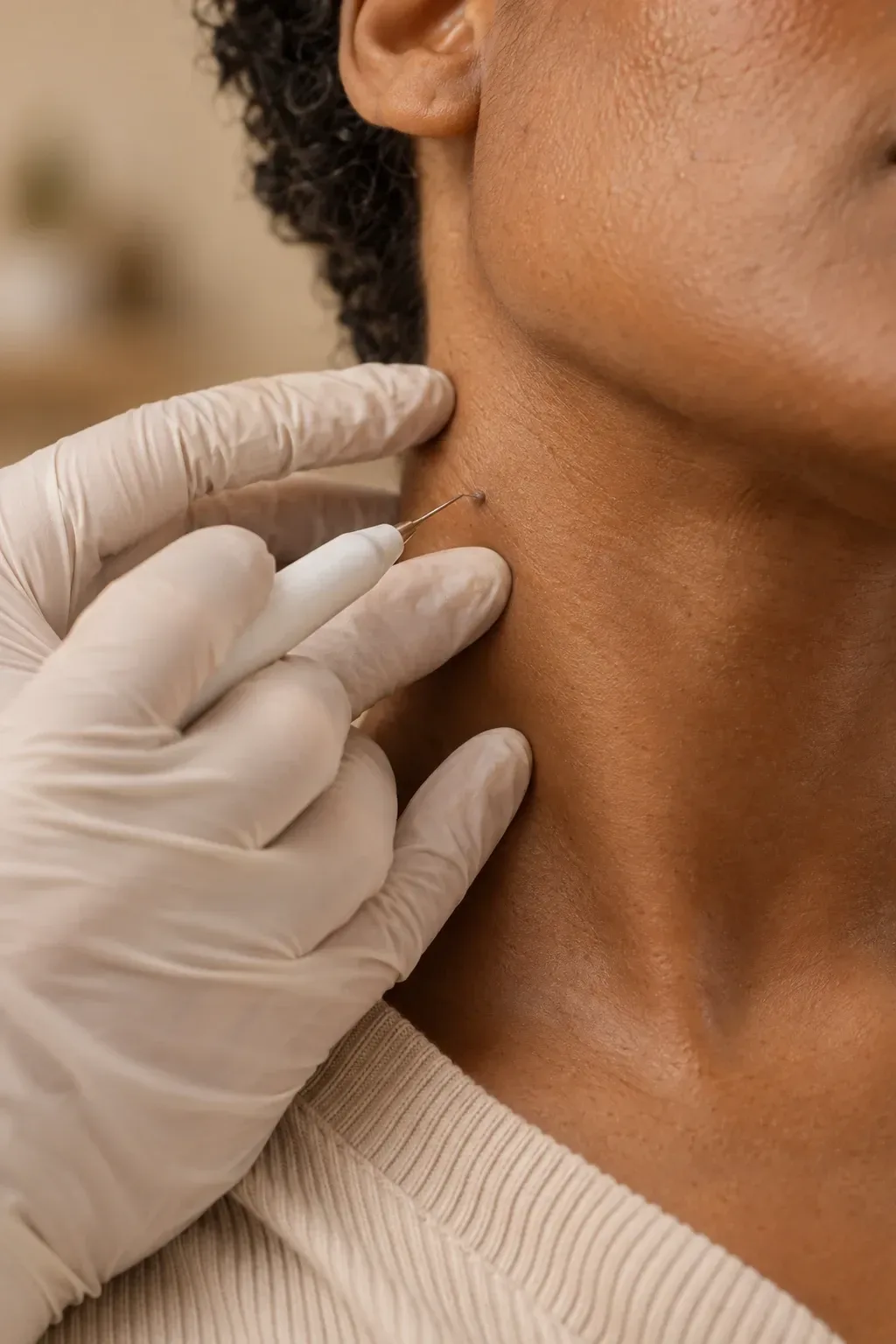
Skin tag removal in Atlanta, GA at SOCAH Center is a quick in-office procedure for the soft, harmless flaps of skin on the neck, eyelids and underarms. Tags are clipped, frozen or cauterized, and small ones usually heal with little to no mark.
Every removal at SOCAH Center is overseen by founder board-certified dermatologist Dr. Nikki D. Hill, MD, FAAD, who served as chief resident during her dermatology training at the University of Texas at Houston-MD Anderson Cancer Center. Before anything is removed, each growth is examined to confirm it is truly a skin tag, because some moles and early skin cancers can look similar. Patients come to us from Atlanta, Tucker, Decatur, Brookhaven and Chamblee.
Medically reviewed by Dr. Nikki D. Hill, MD, FAAD. Last updated: October 2026.

Why Remove Them
When Skin Tags Become a Daily Irritation
Comfort, confidence and safety
The problem. Skin tags are harmless, yet they rarely stay out of the way. Tags on the neck catch on necklaces and collars, underarm tags rub against bra straps and razors, and eyelid tags can brush your lashes or sit in your line of sight. Twisted tags may swell, bleed or turn dark and painful. Many people try snipping them at home, tying them off or using drugstore kits, which can lead to bleeding, infection, scarring or a skin cancer that goes unnoticed.
The solution. Professional skin tag removal clears tags safely in one short visit. Your provider first confirms the diagnosis, then picks the gentlest effective method: clipping for tags on a stalk, cryotherapy for tiny tags, or cautery for flat or clustered ones. Numbing is used when needed, bleeding is controlled on the spot, and anything that looks unusual can be sent to a lab. The result is smooth, comfortable skin with minimal marking.
Understanding the Procedure
What Is Skin Tag Removal?
Clipping, cryotherapy and cautery
Skin tag removal is a minor dermatologic procedure that takes off benign acrochordons for comfort or appearance. Tags are not cancerous or contagious; see the American Academy of Dermatology overview of skin tags. The methods are standard medical techniques rather than a single FDA-approved product.
Clipping snips the stalk with sterile scissors, cryotherapy freezes small tags so they fall off within one to two weeks, and cautery seals the base. A local anesthetic keeps larger tags comfortable, and most sites heal in one to two weeks.
Treatment Timeline:
- Procedure Time:
- 15 to 30 minutes
- Back to Routine:
- Same day
- Healing:
- 7 to 14 days
- Final Look:
- 4 to 8 weeks
Treatment Areas
Where We Perform Skin Tag Removal
Common skin tag locations
- Neck
- Clears tags that catch on collars, necklaces and scarves
- Eyelids
- Careful removal of tags near the lash line and eye crease
- Underarms
- Ends rubbing from shaving, deodorant and bra straps
- Groin and Inner Thighs
- Removes tags irritated by clothing and friction
- Under the Breasts
- Relieves tags trapped by underwire and skin folds
- Face and Trunk
- Clears tags on the cheeks, chest, back and waistline
Benefits of Professional Skin Tag Removal
Comfort with minimal marking
Skin Tag Removal vs Alternatives
Our visit combines diagnosis with the best method for each tag. Here is how that compares with single methods, home kits and waiting.
| Option | How It Works | Procedure Time | Results | Recurrence | Downtime | Best For |
|---|---|---|---|---|---|---|
| SOCAH Center Skin Tag Removal | Exam, then clipping, cryotherapy or cautery per tag | 15 to 30 minutes | Tags removed the same day or within 2 weeks | Treated tags rarely return | None to minimal | Single or multiple tags anywhere on the body |
| Cryotherapy Alone | Liquid nitrogen freezes the tag | A few minutes | Tag falls off in 1 to 2 weeks | Larger tags may need a repeat | Minor blistering | Very small tags |
| Electrocautery Alone | Heat seals and removes the tag | 10 to 20 minutes | Immediate removal | Low for treated tags | Small scab for 1 to 2 weeks | Flat or tiny clustered tags |
| At-Home Removal Kits | Bands, creams or acids applied without an exam | Days to weeks | Unpredictable | Often incomplete | Burns, infection or scarring possible | Not recommended by dermatologists |
| Observation | Leaving harmless tags in place | None | Tags remain and may grow | Not applicable | None | Tags that cause no irritation |









Is It Right for You
Who Is a Good Candidate for Skin Tag Removal?
Adults and teens with bothersome tags
Most healthy adults and teens with skin tags that catch, rub, bleed or bother them cosmetically are good candidates. Tags are more common with weight gain, insulin resistance, pregnancy and family history, as the MedlinePlus entry on cutaneous skin tags notes.
Ideal Candidates for Skin Tag Removal
- Tags that snag on jewelry, clothing, seat belts or razors
- Tags that have bled, swollen or turned dark after twisting
- Tags on the eyelids that brush the lashes or affect vision
- Several tags you would like cleared in one visit
- Anyone who wants a growth checked before deciding on removal
Who Should Wait or Avoid Skin Tag Removal
- Active infection or open skin at the site
- Pregnancy, unless a tag is bleeding or painful (many fade after delivery)
- Bleeding disorders or blood thinners, until reviewed with your provider
- A history of keloids, which calls for a conversation about technique first
A growth that changes color, bleeds without injury or looks different from your other spots needs evaluation, and a full-body skin cancer screening may come first. Pigmented bumps are handled through dermatologist mole removal, and the small dark facial papules often mistaken for tags are treated with DPN removal for dermatosis papulosa nigra.
Your Visit
Skin Tag Removal Step by Step
From exam to aftercare
Exam and Plan
Dr. Hill or your provider confirms each growth is a skin tag and selects clipping, freezing or cautery.
Prep and Numbing
The skin is cleansed, and a small local anesthetic is used for larger or sensitive tags.
Removal
Each tag is clipped at its base, frozen with liquid nitrogen or sealed with fine cautery.
Hemostasis
Any pinpoint bleeding is stopped on the spot, and tissue goes to pathology if it looks atypical.
Aftercare
A thin layer of petrolatum and a bandage are applied, and you get written wound-care steps.
Skin Tag Removal Side Effects and Safety
Skin tag removal is low risk when done by a dermatology team.
Common, Short-Lived Effects
Expect mild tenderness, a small scab and slight redness for several days.
Less Common Reactions
Less common effects include minor bleeding, infection, blistering after cryotherapy, a small scar, or a tag that returns. Cryotherapy can leave a lighter or darker spot, which is more noticeable in deeper skin tones, so we often choose clipping or careful cautery for those patients.
Safety and When to Call Us
Do not treat tags yourself: The American Academy of Dermatology warns against over-the-counter mole and skin tag removers, which have caused burns, scarring and delayed cancer diagnoses. Call us for spreading redness, warmth, pus or bleeding that does not stop with pressure.
Investment
Skin Tag Removal Cost in Atlanta
What affects your investment
How Much Does Skin Tag Removal Cost in Atlanta?
Cost depends on the number, size and location of your tags, the method used, whether numbing or pathology is needed, and whether removal is cosmetic or medical. Your provider reviews exact pricing at your consultation before any removal begins.
Insurance and Skin Tag Removal
Insurance often treats skin tag removal as cosmetic. It may be covered when tags bleed, become inflamed or interfere with function, and pathology is usually billed separately. Check coverage with your plan and review our participating insurance plans.
Financing and Payment Options
For self-pay care, CareCredit and Cherry let you spread payments over time. Visit our financing options for dermatology care to apply.
Why Choose SOCAH Center for Skin Tag Removal in Atlanta, GA
Dermatology-led care
Dr. Nikki D. Hill is a board-certified dermatologist and member of the American Society for Dermatologic Surgery. Her team examines every growth before removal and chooses methods that limit dark or light marks on deeper skin tones.
Board-Certified Oversight
Procedures led by a board-certified dermatologist
Diagnosis First
Every growth is examined, with pathology when anything looks atypical
Pigment-Aware Technique
Methods chosen to lower the risk of dark or light spots
Several Tags, One Visit
Multiple tags can often be treated in the same appointment
Same-Day Routine
Most patients return to normal activity the day of removal
Eyelid Tags Handled
Tags near the lashes or in sensitive spots removed with the right method

Related Treatment
Mole Removal
Every mole is evaluated first, then removed with the method that suits it and your skin.
- Diagnosis First
- Lab Answers
- No-Stitch Option
Keloid Removal
Flatter, calmer keloid scars, with a plan built around how your skin heals.
- Combined Care
- Lower Recurrence
- Symptom Relief
Cyst Removal
Remove a bothersome cyst in one short office visit, with a small, carefully closed scar.
- About 30 Minutes
- Lower Return Risk
- Layered Closure
Skin Tag Removal FAQs
How much does skin tag removal cost in Atlanta?
Does skin tag removal hurt?
How long does the appointment take?
Will skin tag removal leave a scar?
When will I see results?
Can skin tags come back after removal?
Is clipping, freezing or cautery better for skin tags?
Is skin tag removal safe for all skin tones?
Can teens and men have skin tags removed?
Should I remove a skin tag at home?
Schedule Your Skin Tag Removal Consultation
References
- Köseoğlu et al., BMC Dermatol. (2020). The role of insulin-like growth factor in Acrochordon Etiopathology. PMID: 33143702.
- Hirt et al., J Am Acad Dermatol. (2019). Skin changes in the obese patient. PMID: 31610857.
- Uzuncakmak et al., Clin Dermatol. (2018). Cutaneous manifestations of obesity and themetabolic syndrome. PMID: 29241757.
- Zimmerman et al., Am Fam Physician. (2012). Cutaneous cryosurgery. PMID: 23316984.
- Clebak et al., Am Fam Physician. (2020). Cutaneous Cryosurgery for Common Skin Conditions. PMID: 32227823.
- Schlichte et al., Dermatol Online J. (2014). Bloodroot associated eschar. PMID: 25046467.