

Dissecting Cellulitis Treatment in Atlanta, GA: Controlling Scalp Nodules and Drainage Before Scarring
Prompt medical care that calms painful nodules and protects your hair.
- Common In:
- Young adult men most often, especially of African descent; women can be affected
- Primary Causes:
- Blocked, ruptured hair follicles that trigger deep scalp inflammation
- Treatment Time:
- Visits of 30 to 60 minutes; oral treatment courses of 3 to 6 months or more
- Results:
- Drainage and pain often ease within 2 to 3 months; scarred areas do not regrow

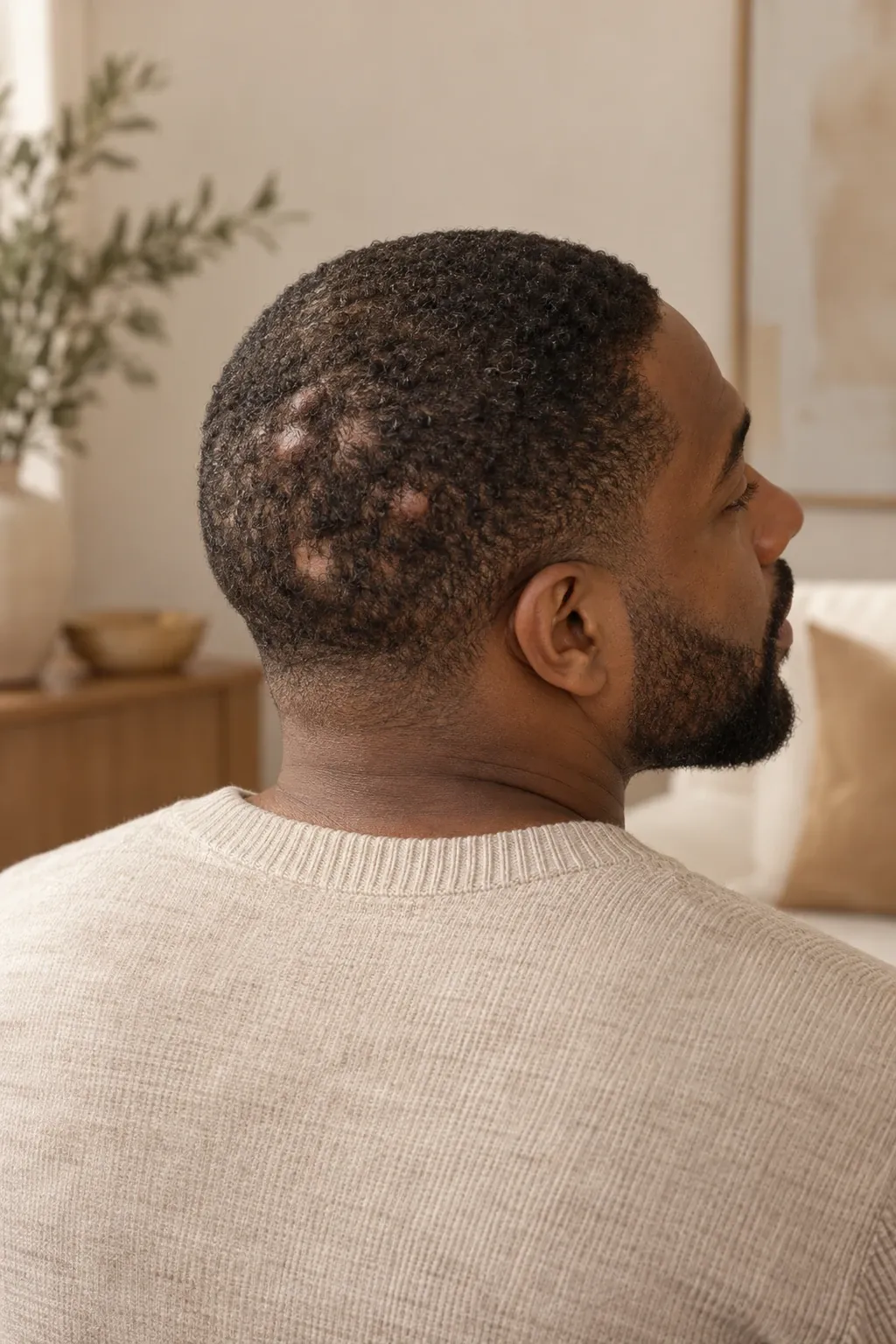
What Is Dissecting Cellulitis of the Scalp?
Recognizing the Signs Early
Dissecting cellulitis of the scalp, also called perifolliculitis capitis abscedens et suffodiens, is a chronic inflammatory condition in which blocked hair follicles rupture deep in the scalp. The result is tender nodules and pockets of fluid that connect under the skin through small tunnels called sinus tracts. Despite the name, it is not a typical skin infection, and antibiotics alone rarely cure it. Without treatment, repeated flares leave scarring and permanent bald patches.
The condition most often affects young adult men of African descent, but it can appear in women and in people of any background. It usually starts at the crown or the back of the scalp. On lighter skin, nodules look red; on deeper skin tones they may look skin-colored, purple or dark brown, and they often heal with darker marks or raised, thick scars. Early bumps under short, coarse or curly hair are easy to mistake for razor bumps.
The goal of dissecting cellulitis treatment is to stop new nodules, dry up drainage and limit scarring. Browse our hair and scalp conditions to see related scarring hair loss diagnoses.
Medically reviewed by Dr. Nikki D. Hill, MD, FAAD. Last updated: October 2026.
Why Dissecting Cellulitis Happens
Understanding the Root Causes
01The Science
It begins with follicular occlusion: dead skin cells and keratin plug the opening of the hair follicle. The plugged follicle swells and ruptures beneath the skin, spilling hair and keratin into the dermis. The immune system reacts strongly, forming nodules and abscesses that join into sinus tracts.
Dissecting cellulitis belongs to the follicular occlusion family, along with hidradenitis suppurativa, acne conglobata and pilonidal cysts, and some patients have more than one. Smoking, excess weight and family history appear to raise the risk. The American Academy of Dermatology guide to hair loss types explains why the cause of hair loss should be confirmed by a dermatologist.
At SOCAH Center, treatment for dissecting cellulitis is part of our medical hair loss treatment program, which combines medicines that quiet inflammation with a plan to protect remaining hair. Once flares are controlled, a gentle scalp detox treatment in our medical hair salon can help keep the scalp clean and comfortable between visits.
02Diagnosis and Treatment
How We Diagnose and Treat It
From Scalp Exam to a Long-Term Plan
Diagnosis starts with a full scalp exam and trichoscopy, which can show yellow plugged follicles and dotted openings typical of the condition. When nodules drain, we may send a culture to look for a secondary bacterial infection. If the picture is unclear, a small punch biopsy helps tell dissecting cellulitis apart from folliculitis decalvans, acne keloidalis nuchae or a fungal scalp infection.
Treatment is matched to severity. Mild disease may respond to oral antibiotics such as doxycycline, chosen for their anti-inflammatory effect, plus steroid injections into painful nodules. Moderate to severe disease often responds best to isotretinoin, which helps keep follicles from plugging. When nodules keep returning despite these options, we refer patients for biologic medicines such as TNF inhibitors. Once the scalp is calm, laser hair removal of the affected area may be added to reduce the follicles that fuel new flares, with settings chosen for your skin tone.
Medical visits, cultures and biopsies are often covered by insurance. For self-pay services such as laser sessions, flexible payment plans through CareCredit and Cherry are available.
What Makes Dissecting Cellulitis Worse?
These factors can trigger new nodules or slow healing. See the AAD overview of hair loss diagnosis and treatment for more background.
- 01SmokingTobacco use is linked to follicular occlusion disorders and can make flares more frequent and harder to control.
- 02Friction and PressureTight caps, helmets and close shaving at the back of the scalp can irritate follicles that are already prone to plugging.
- 03Excess WeightHigher body weight is associated with follicular occlusion conditions and with more inflammation overall.
- 04Squeezing NodulesPressing or draining nodules at home pushes debris deeper and can extend the tunnels under the skin.
- 05Delayed TreatmentEach untreated flare destroys more follicles and adds scar tissue that cannot be reversed.

Why Choose SOCAH Center for Dissecting Cellulitis Care in Atlanta, GA
Dr. Nikki D. Hill, MD, FAAD, a board-certified dermatologist nationally recognized for treating medical hair loss disorders, leads care for patients from Atlanta, Tucker, Chamblee and Stone Mountain, with a plan built to control flares before more scarring forms.
- Scarring Alopecia Focus
- Daily work with scarring hair loss means dissecting cellulitis is recognized early and treated firmly.
- Full Treatment Range
- Antibiotics, isotretinoin, steroid injections and laser support are coordinated in one plan.
- Every Hair Type
- Care and grooming advice fit short, coarse, curly and coily hair, with scars assessed on every skin tone.
- Salon Support
- Our dermatologist-supervised medical hair salon offers gentle scalp care once flares are under control.

Dissecting Cellulitis Treatment Options
Most patients need more than one of these medical options, chosen by how active and widespread the nodules are.
| Care Program | Treatment Option | Best For | Results Timeline | Maintenance |
|---|---|---|---|---|
| Hair Loss Treatment | Oral anti-inflammatory antibiotics | Mild or early disease | Less drainage in 4 to 8 weeks | Courses of several months |
| Hair Loss Treatment | Isotretinoin | Moderate to severe or recurring nodules | Steady improvement over 2 to 4 months | Course of 5 to 6 months or longer, with lab checks |
| Hair Loss Treatment | Intralesional steroid injections | Individual painful nodules | Flattening within 1 to 3 weeks | Repeated as new nodules appear |
| Hair Loss Treatment | Biologic therapy referral | Severe disease that resists other options | Varies by medicine, often months | Ongoing under specialist care |
Signs You May Have Dissecting Cellulitis
If any of these describe your scalp, a dermatology visit now can help prevent permanent hair loss.
Painful Scalp Bumps
You feel firm or soft, tender lumps on the crown or back of your scalp that come and go but never fully clear.
Drainage
Bumps open and leak pus or blood-tinged fluid onto your pillow, hat or collar.
Connected Lumps
Pressing one bump seems to move fluid into another nearby, a sign of tunnels under the skin.
Patchy Hair Loss
Hair falls out over the bumps, and some areas stay bald even after the swelling goes down.
Thick Scars
Healed areas leave raised, thick or dark scars, and the bumps return despite antibiotics or home care.



Related Treatment
PRP for Hair Loss
Concentrated platelets from your own blood, placed where follicles are thinning, for every hair type.
- Your Own Blood
- No Surgery
- Little Downtime
Revive Growth Factor Therapy
One growth factor treatment, three applications: thinning hair, tired skin and uneven tone.
- Three Uses in One
- Same Formula
- Gentle on Pigment
Hair Replacement for Men
Custom hair units matched to your texture, color and hairline, for a full look the same day.
- Same-Day Results
- No Surgery
- Matched to You
Frequently Asked Questions
Is dissecting cellulitis contagious?
Can hair grow back after dissecting cellulitis?
Will antibiotics cure dissecting cellulitis?
How long does dissecting cellulitis treatment take?
Can I still get haircuts and shave my head?
Is dissecting cellulitis related to hidradenitis suppurativa?
Schedule Your Dissecting Cellulitis Treatment Consultation
Scientific References
- Scheinfeld, Skinmed. (2015). Dissecting Cellulitis. PMID: 26380513.
- Melo et al., An Bras Dermatol. (2019). Trichoscopy findings in dissecting cellulitis. PMID: 31777364.
- Macedo et al., J Cutan Med Surg. (2022). Dissecting Cellulitis of the Scalp. PMID: 34761965.
- Thomas et al., J Dermatolog Treat. (2021). Approach to treatment of refractory dissecting cellulitis of the scalp: a systematic review. PMID: 31348693.
- Wu et al., Dermatol Ther. (2022). Therapeutic options for perifolliculitis capitis abscedens et suffodens: A review. PMID: 35946169.